
Plant Community
A living landscape selected in response to climate, ecology and site character.
A modular floating platform that brings together plants, buoyancy, habitat and water into one living structure.
Floating avoids making foundations and permanent bottom works the starting point. That can be valuable in changing, constrained or sensitive waterbodies—but only after stability, access and stewardship are resolved.
Move with the water surface while freeboard and anchoring are designed for the operating range.
Useful where piling, excavation or rebuilding the bed is difficult, undesirable or ecologically sensitive.
Add a living waterline to an established lake, pond or waterfront with limited civil intervention.
Support movable, phased or time-bounded pilots when permanent construction is premature.
Each layer performs a distinct role. Together, they connect landscape above the water with habitat below it.
A living landscape selected in response to climate, ecology and site character.
A porous zone that supports planting and allows roots to reach the water.
A stable, maintainable core that keeps the living layers at the waterline.
Roots and submerged surfaces add complexity at the boundary between structure and water.
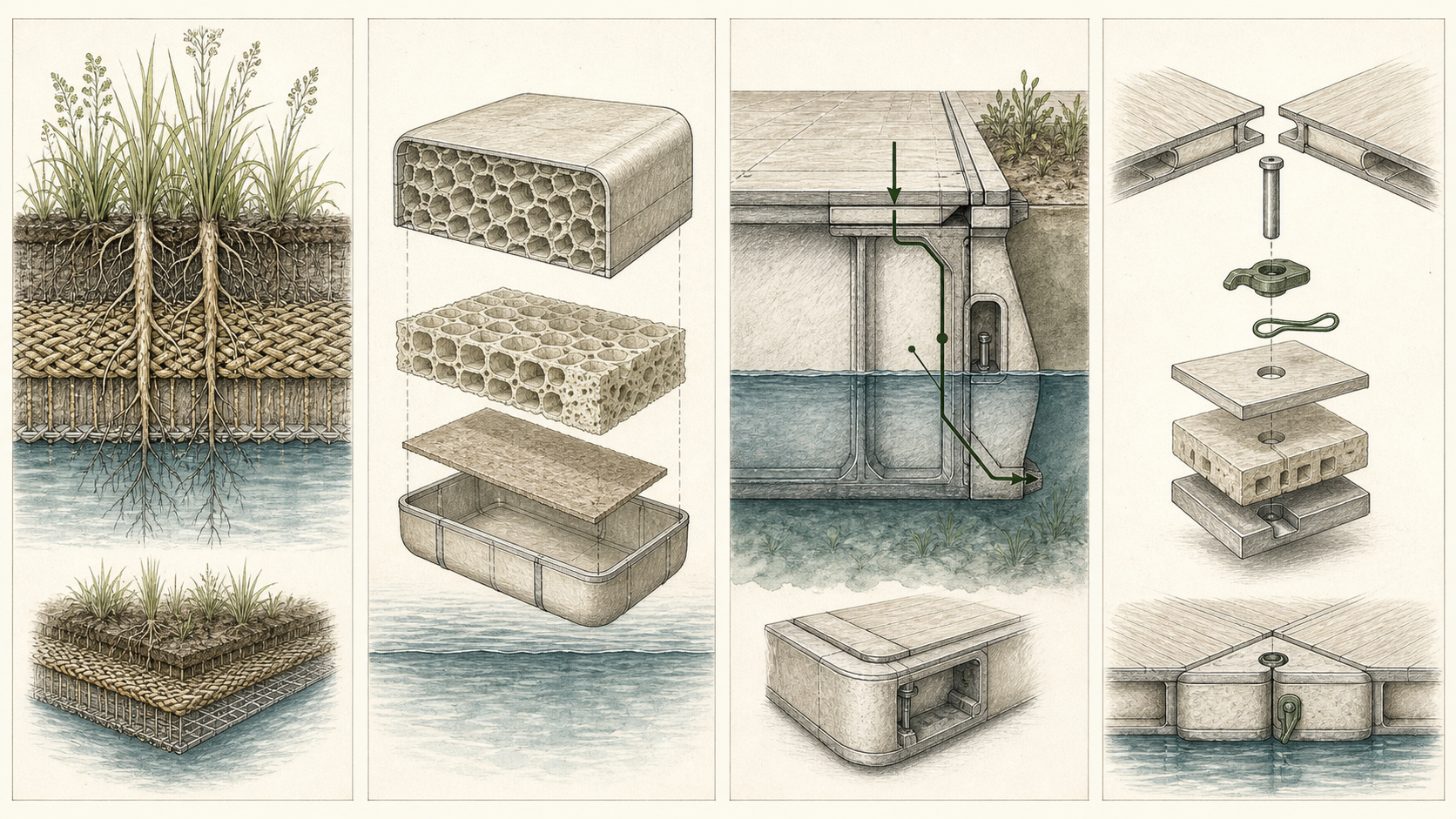
Connect plants and roots with water while keeping the growing layer accessible for care.
Use layered construction to carry buoyancy and support, allowing functions to be evaluated and renewed separately.
Bring load, waterline and maintenance access into one legible detail instead of sealing them into an inaccessible whole.
Separable connections support assembly, local replacement, repair and material recovery.
The layers work together, but they do not need to change at the same pace.
The waterline is not an edge to conceal. It is where the system connects visible landscape with living processes beneath the surface.

Living and material layers change at different rates. The product architecture keeps their condition visible and makes routine care, partial renewal and reconfiguration practical after deployment.
Visible planting cues, exposed connection points and defined inspection locations help teams compare growth and structural condition during routine site visits—without claiming automated sensing.
Standardised connections and lift-out modular areas support access to planting, habitat surfaces and buoyancy components, so care can focus on the part that needs attention.
Separable block-based layers allow a worn or damaged part to be renewed independently where the project configuration permits, rather than rebuilding the entire island.
A family of compatible base shapes can be selected and recomposed into bands, clusters or islands as access, planting intent and site conditions evolve.
Modularity provides a shared logic, not a fixed appearance. The same underlying system can form different edges, densities and landscape compositions.
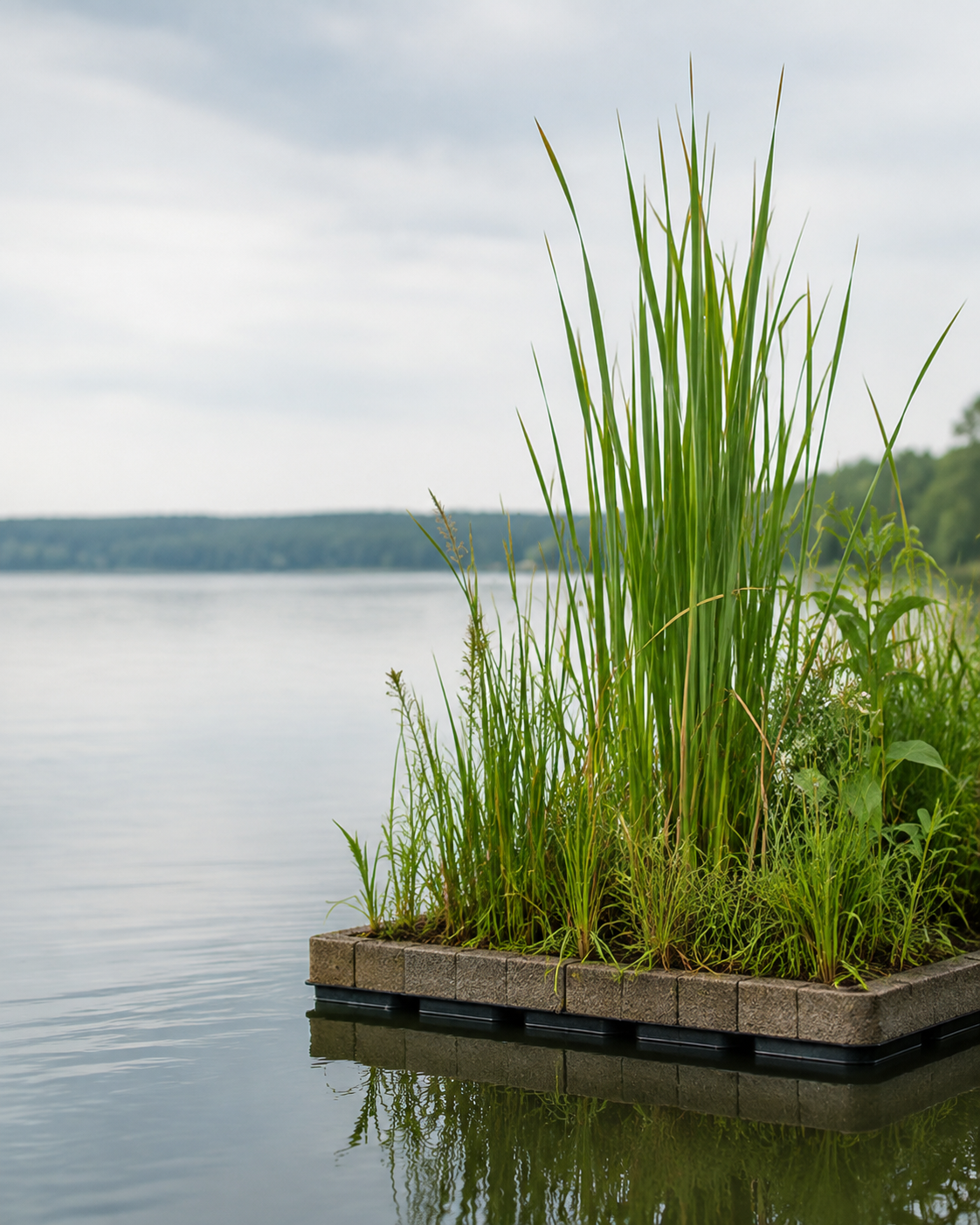
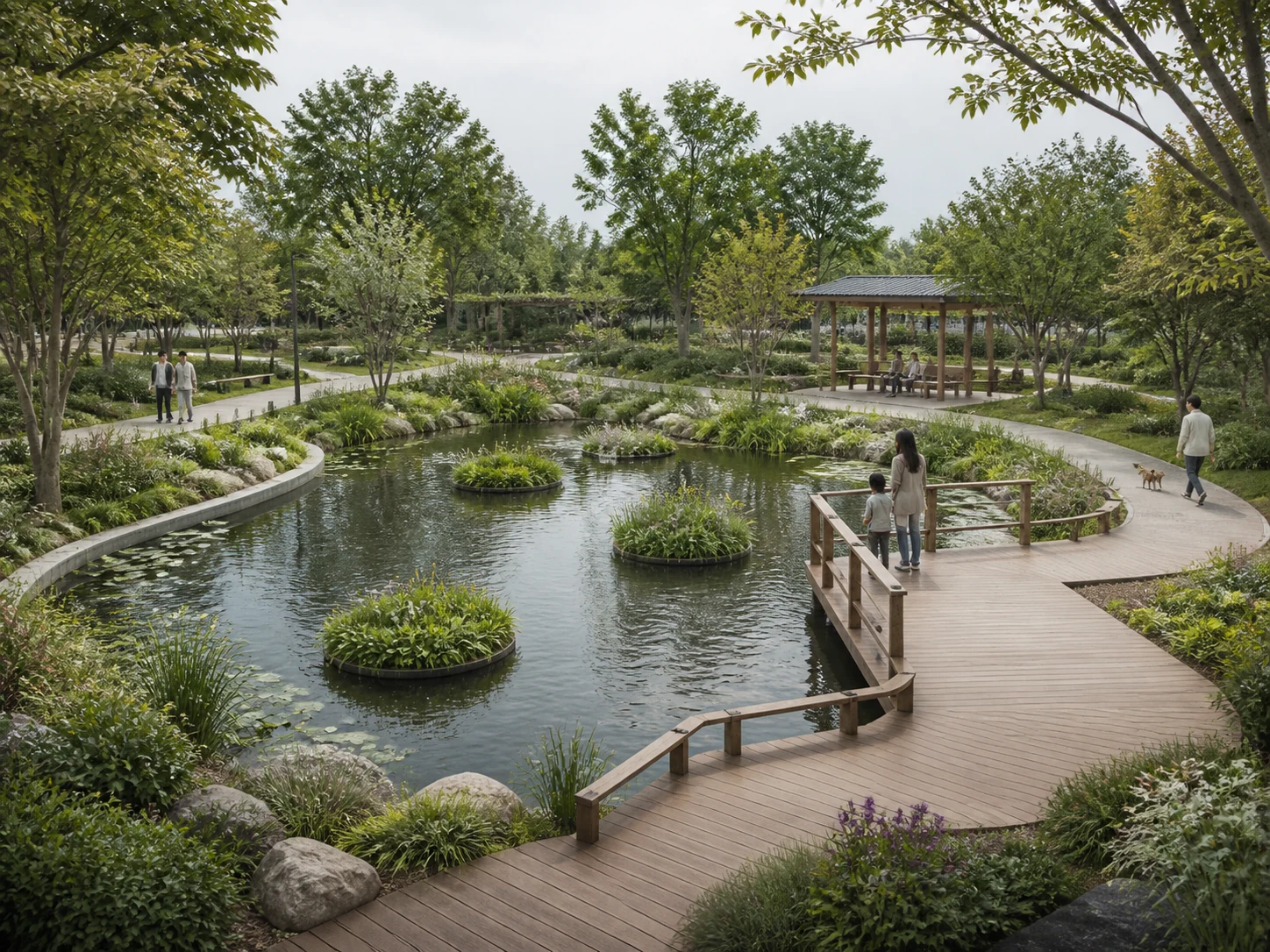
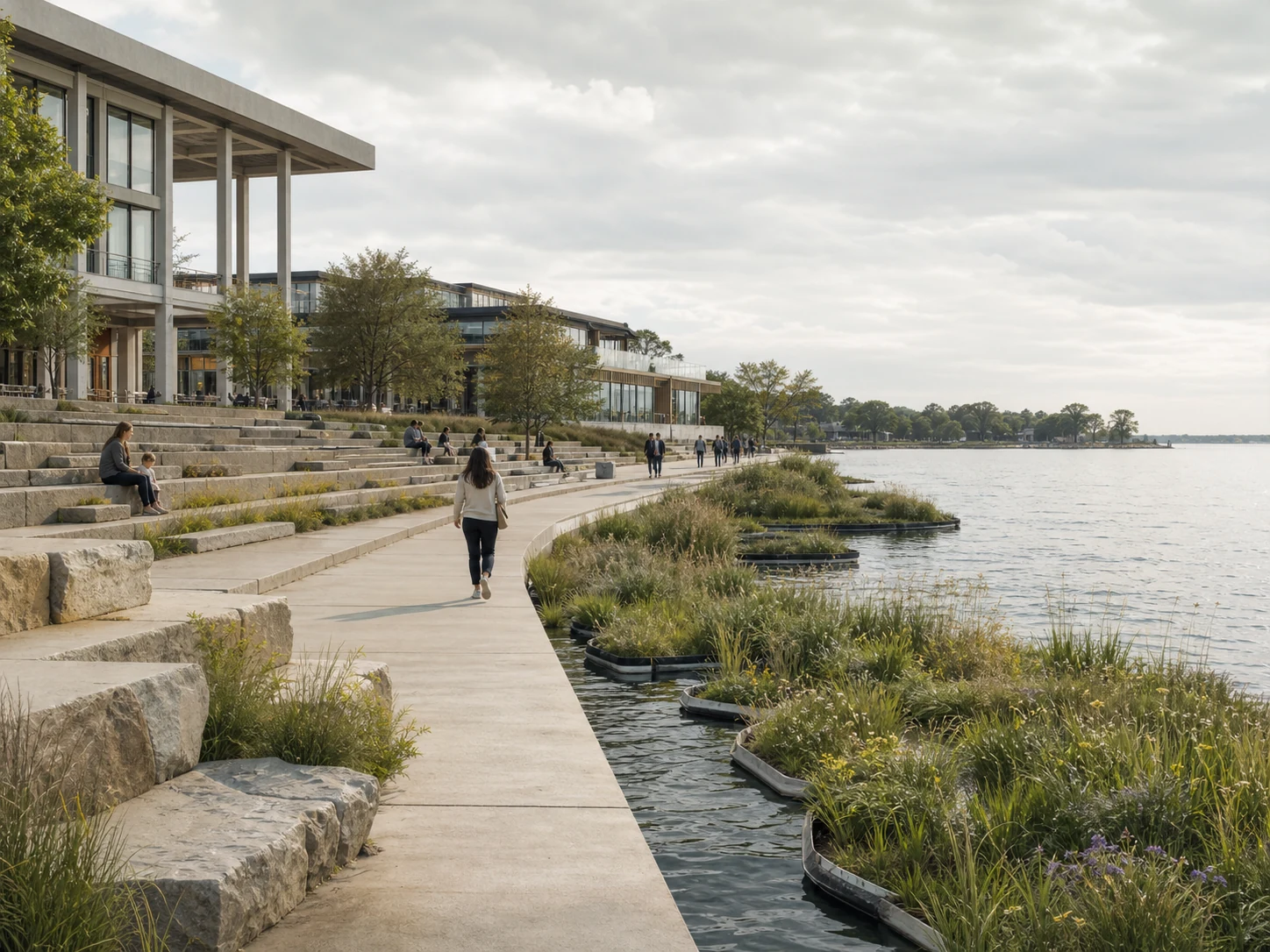
Respond to water conditions, access and ecological intent.
Arrange modules as fields, bands, clusters or islands.
Allow a project to be maintained, adjusted or extended over time.
Scale is a project decision: match the intervention to the objective, site constraints, observation method and capacity for long-term care.
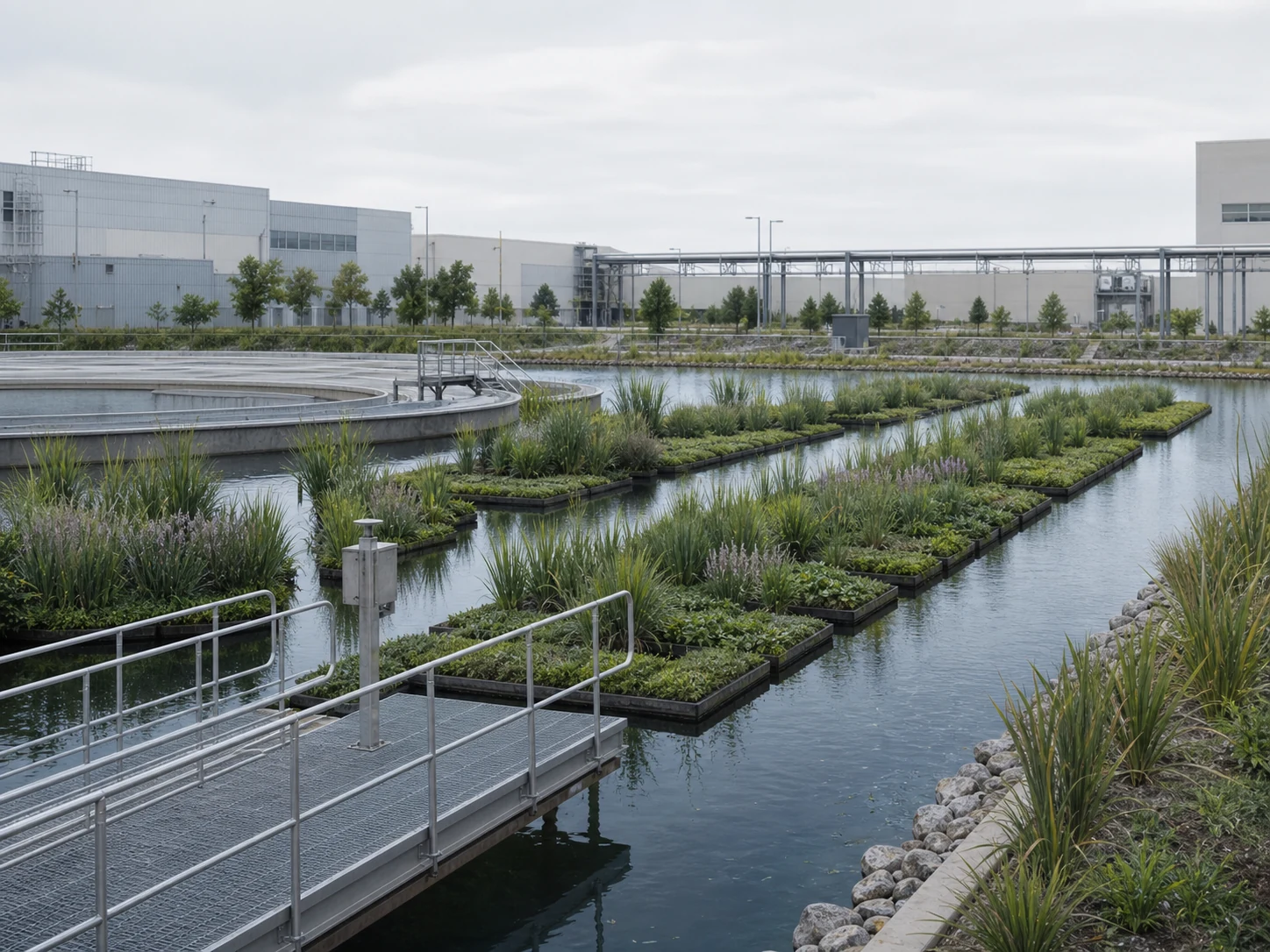
Test site fit, access, planting and observation at a bounded scale.
Configure the intervention around one waterbody and its operating constraints.
Follow early growth, maintenance needs and seasonal change.
Use assessed evidence to guide renewal, adaptation or responsible replication.
Every waterbody brings different conditions. Start with the site, the challenge and the kind of living water you want to create.
Start a conversation→