Floating ecological systems integrated with architecture, a public waterfront and an existing urban waterbody
Applications

Where can a floating ecosystem begin?

From urban rivers and landscape lakes to public waterfronts and research sites, different waterbodies can become starting points for bringing ecological complexity back into the built environment.

01 / Project outcomes

What outcome are you looking for?

Start with the change the project needs. These are objectives that can shape a site-specific floating ecological system—not guaranteed results or separate product categories.

Landscape enhancement

Bring planting, seasonality and a stronger waterscape identity to a visible waterbody.
Habitat creation

Design root zones, submerged surfaces and refuge into places where habitat structure is limited.

Biodiversity

Support conditions for richer plant and animal communities, with outcomes understood through observation.

Ecological retrofit

Add ecological and landscape functions to an existing waterbody without treating total reconstruction as the default.

Environmental performance

Define intended environmental functions and a proportionate approach to testing, observation and maintenance.

ESG demonstration

Make a client's environmental intent visible through a physical, site-specific intervention; reporting claims require separate evidence.

Research & demonstration

Create adaptable, observable platforms for pilots, comparison, learning and communication.

02 / Site-fit problems

Problems worth solving with a floating system.

Start with the condition and constraint—not a generic waterbody label. Each response is a project-specific configuration, not a promised result.

Water-level fluctuation

Site condition
The operating waterline changes.
Pain point
A fixed planted edge may lose contact with water or become repeatedly submerged.
Why floating
Living layers can track the surface within a designed anchoring range.
Intended outcome
A more continuous habitat and planting interface.
Configuration direction
Calibrate freeboard, anchoring travel, planting and access.

No / low bottom disturbance

Site condition
Piling, excavation or bed disturbance is constrained.
Pain point
New ecological structure is difficult to add without heavy works.
Why floating
A floating layer reduces reliance on permanent bottom construction.
Intended outcome
Habitat and landscape retrofit with lower civil intervention.
Configuration direction
Lightweight modules with site-specific anchoring and installation.

Existing landscape retrofit

Site condition
A park, campus, property or public waterbody already exists.
Pain point
The water is visible but ecologically simplified; total reconstruction is disruptive.
Why floating
The intervention can be added, moved, maintained or expanded in phases.
Intended outcome
Landscape, habitat and observable environmental change.
Configuration direction
Coordinate composition with views, operations, maintenance and a baseline.

Sensitive / demonstration setting

Site condition
The site needs reversible intervention, public learning or field research.
Pain point
Permanent construction or untestable claims would be premature.
Why floating
Modules create an observable platform that can adapt as evidence develops.
Intended outcome
Habitat plus measurable, clearly reported environmental performance.
Configuration direction
Define indicators, comparison areas, access and reporting from the outset.
03 / Value for project teams

Bring living water into the project—without losing design control.

The value changes with the client. We connect a configurable physical system with design collaboration, planned stewardship and evidence appropriate to the project.

Architecture

Extend a building's spatial and environmental idea onto the water through a system that can coordinate with edges, structure, views and public experience.

Landscape design

Gain a modular living medium that can be composed through form, planting, seasonality and open water—not specified as a generic floating product.

Developers & property

Upgrade an existing water feature with a visible landscape intervention that can be phased, maintained and developed without defaulting to total reconstruction.

Corporate & industrial sites

Connect a physical nature intervention with site objectives, observation and understandable internal reporting, while keeping the work product-led.

Public realm teams

Add ecological character while protecting sightlines, access, safety and the everyday legibility of public water.

Research partners

Use configurable modules as an observable field platform for comparison, learning and iterative development.

04 / Application environments

Six settings. Six different reasons to intervene.

Each setting pairs a client concern with a possible project response. These are conceptual applications, not fixed products or completed projects.
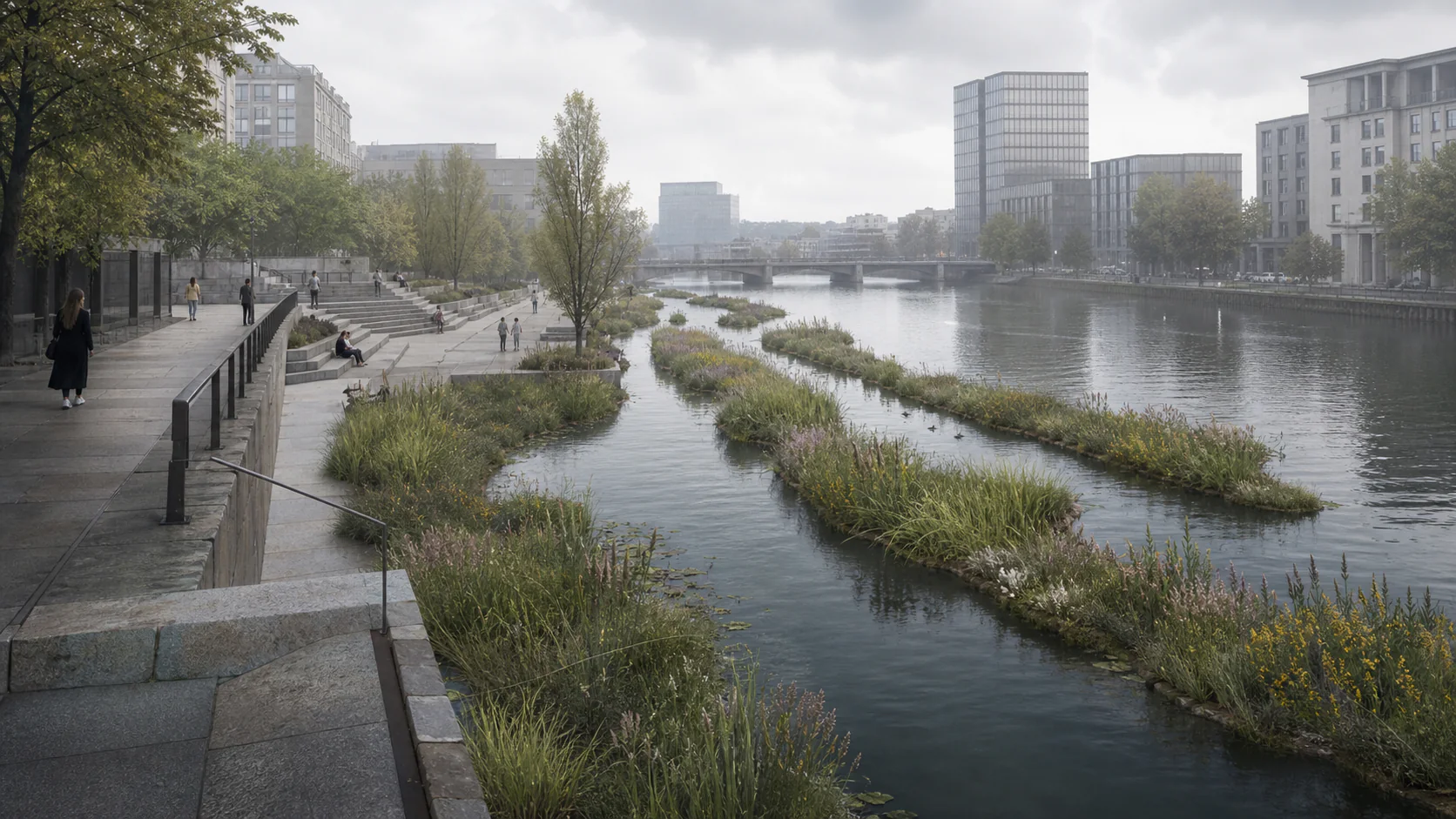
Landscape concept of a floating ecological edge integrated with a hard urban riverfront
A

Urban Rivers

Client concern
Hard edges and fragmented habitat
Value created
Introduce ecological complexity without rebuilding the entire bank
Project response
Linear or clustered habitat bands, positioned around flow, access and open water
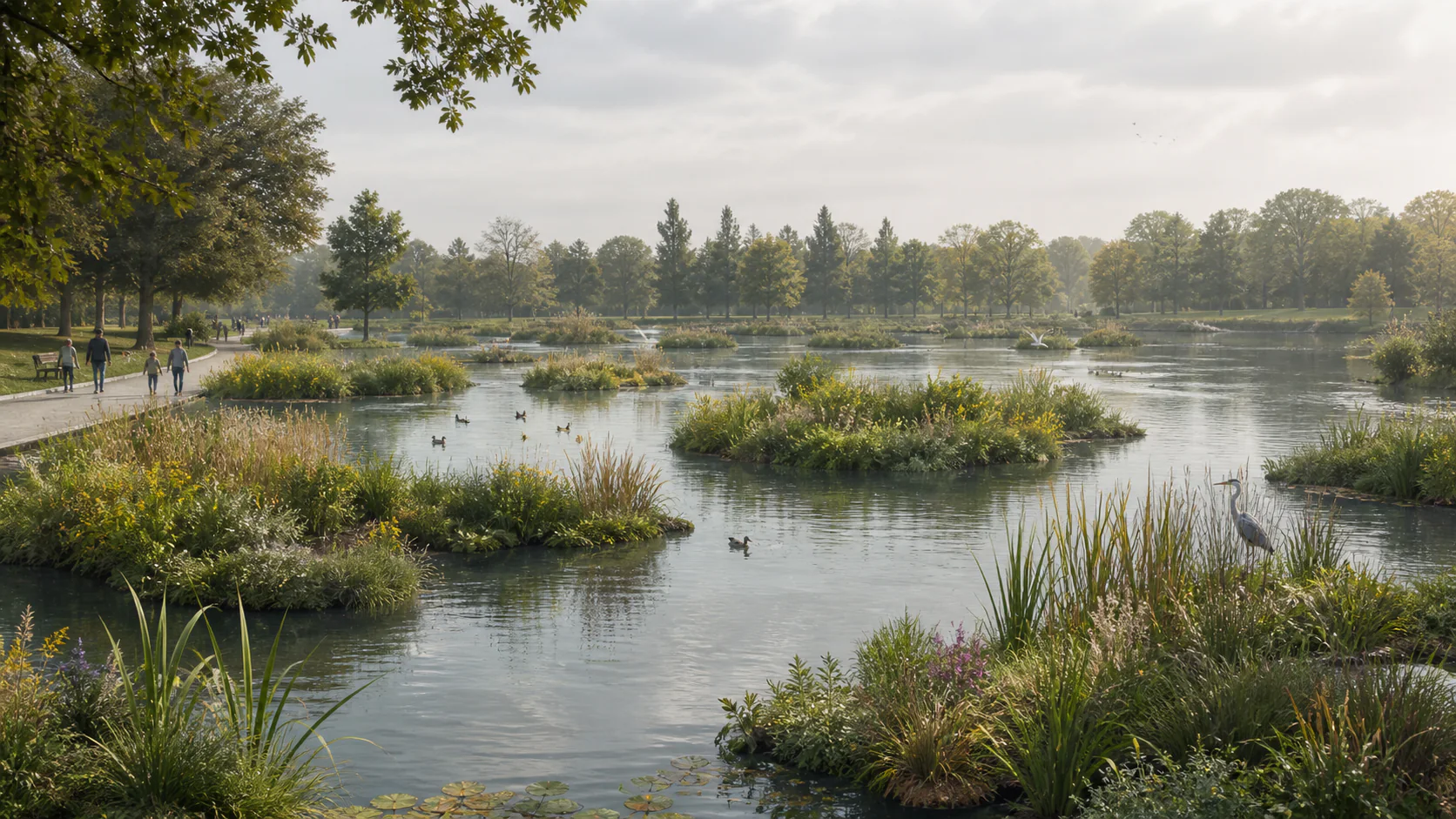
Landscape concept of floating plant communities in a lake or pond
B

Lakes & Ponds

Client concern
Simplified planting and exposed open water
Value created
Add seasonal landscape and distributed habitat
Project response
Shoals, gardens or mixed clusters calibrated to views and water conditions
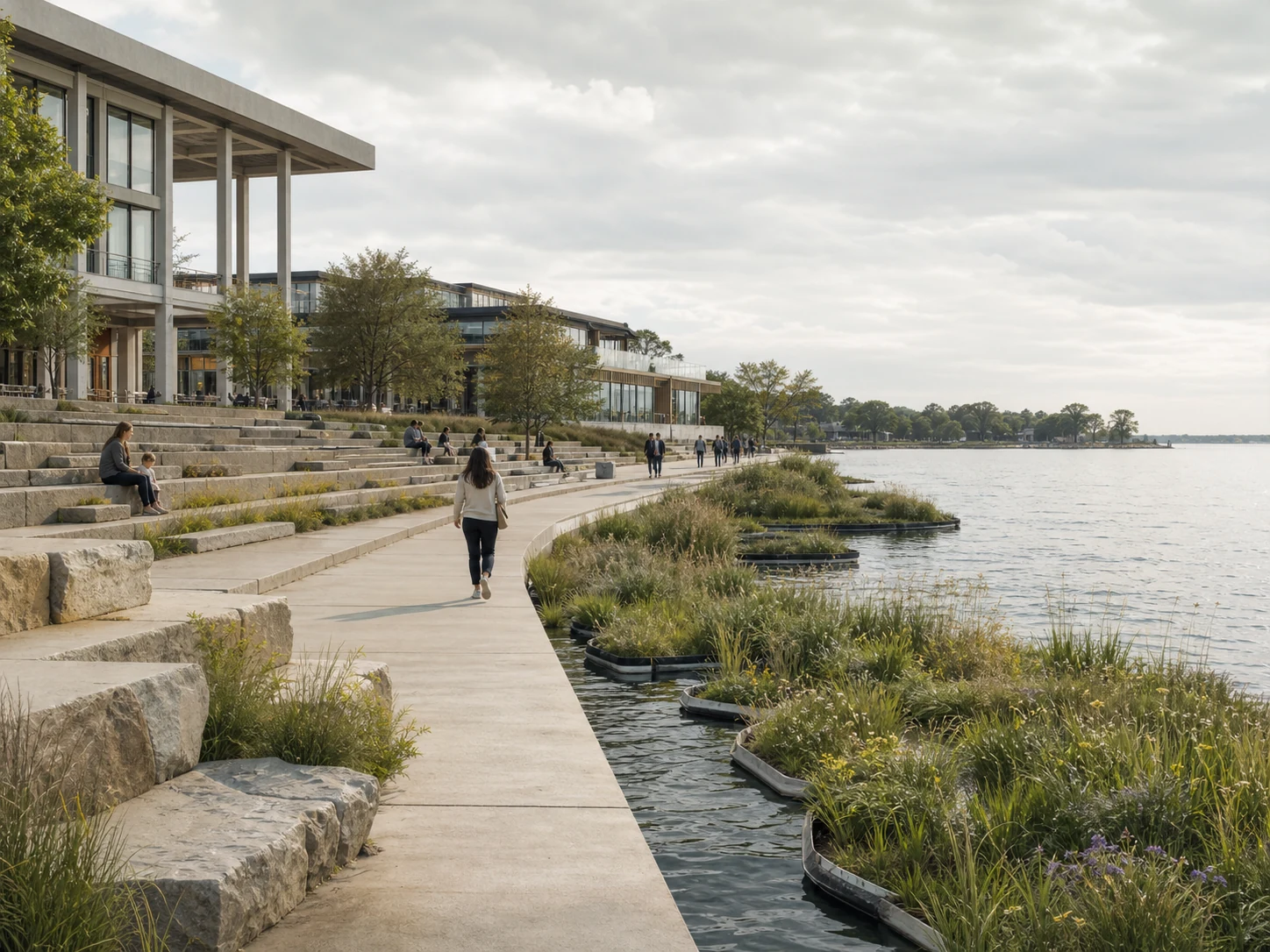
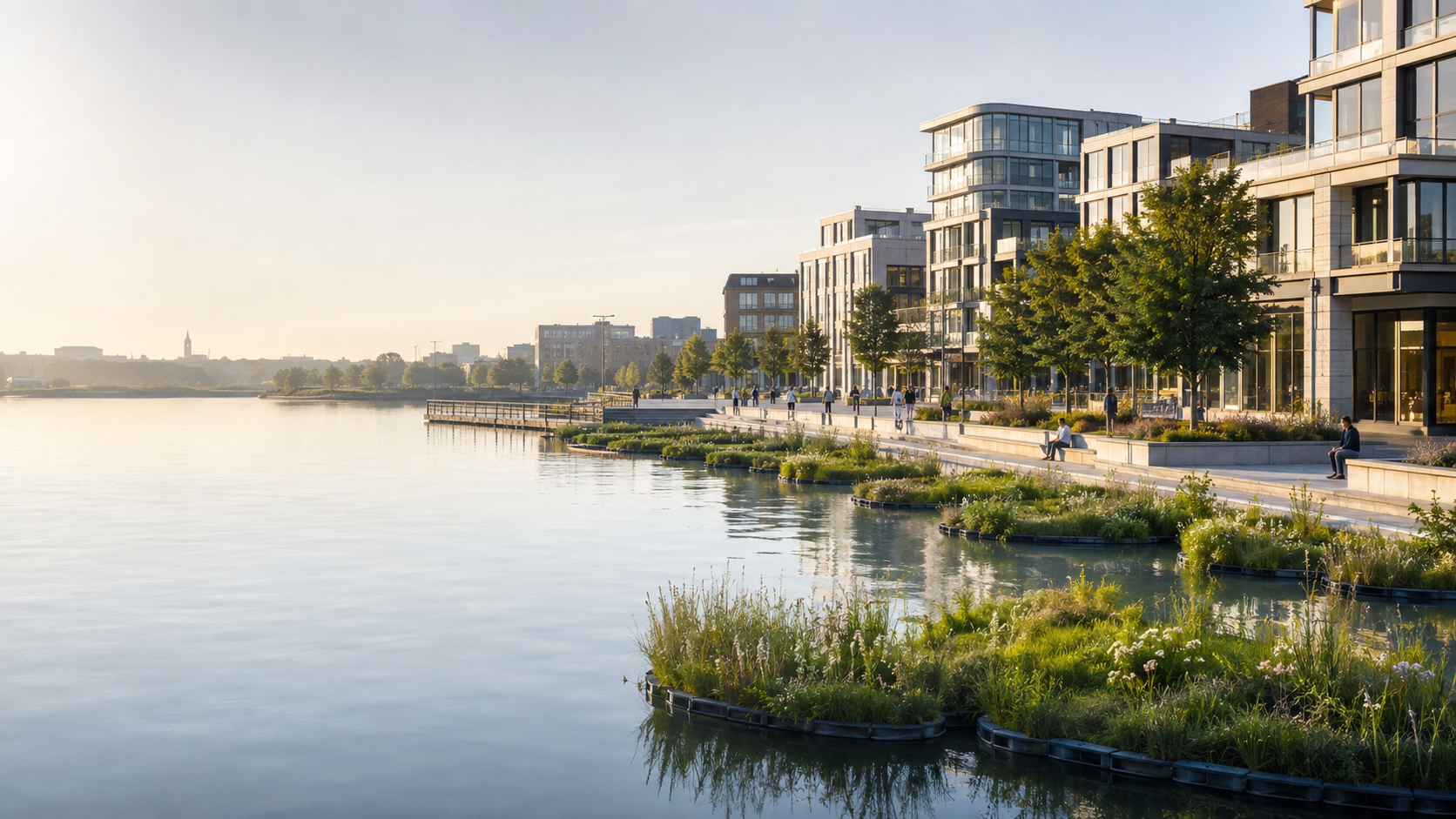
Concept of a floating ecosystem at a civic waterfront
C

Waterfronts

Client concern
Public edges disconnected from aquatic life
Value created
Make ecology visible alongside civic use
Project response
Defined compositions that retain sightlines, access and a clear public-water relationship
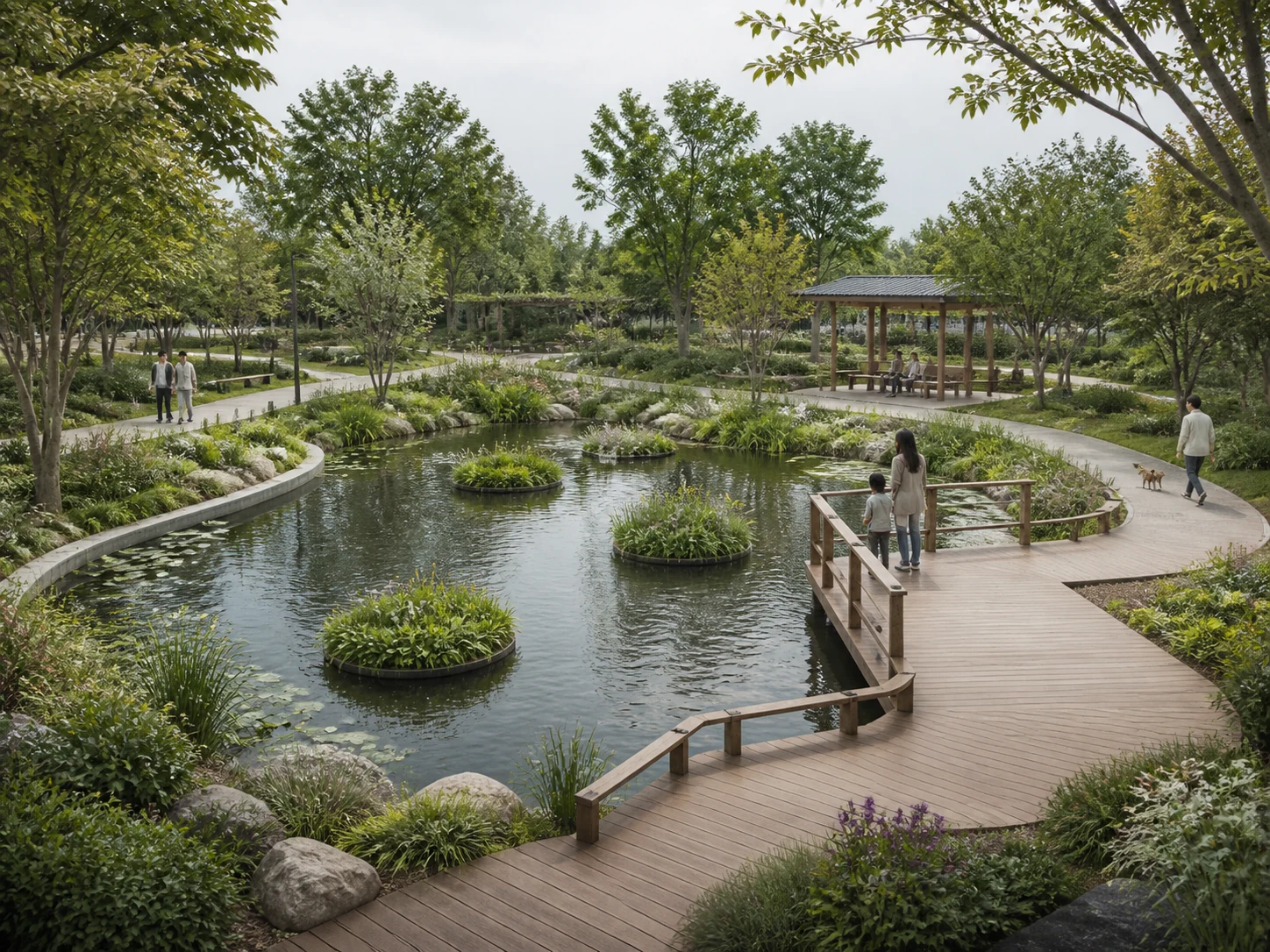
Concept of a floating ecosystem within a park waterbody
D

Parks

Client concern
Decorative water with limited ecological structure
Value created
Connect recreation, planting and habitat
Project response
Garden-like communities with legible edges and planned stewardship access
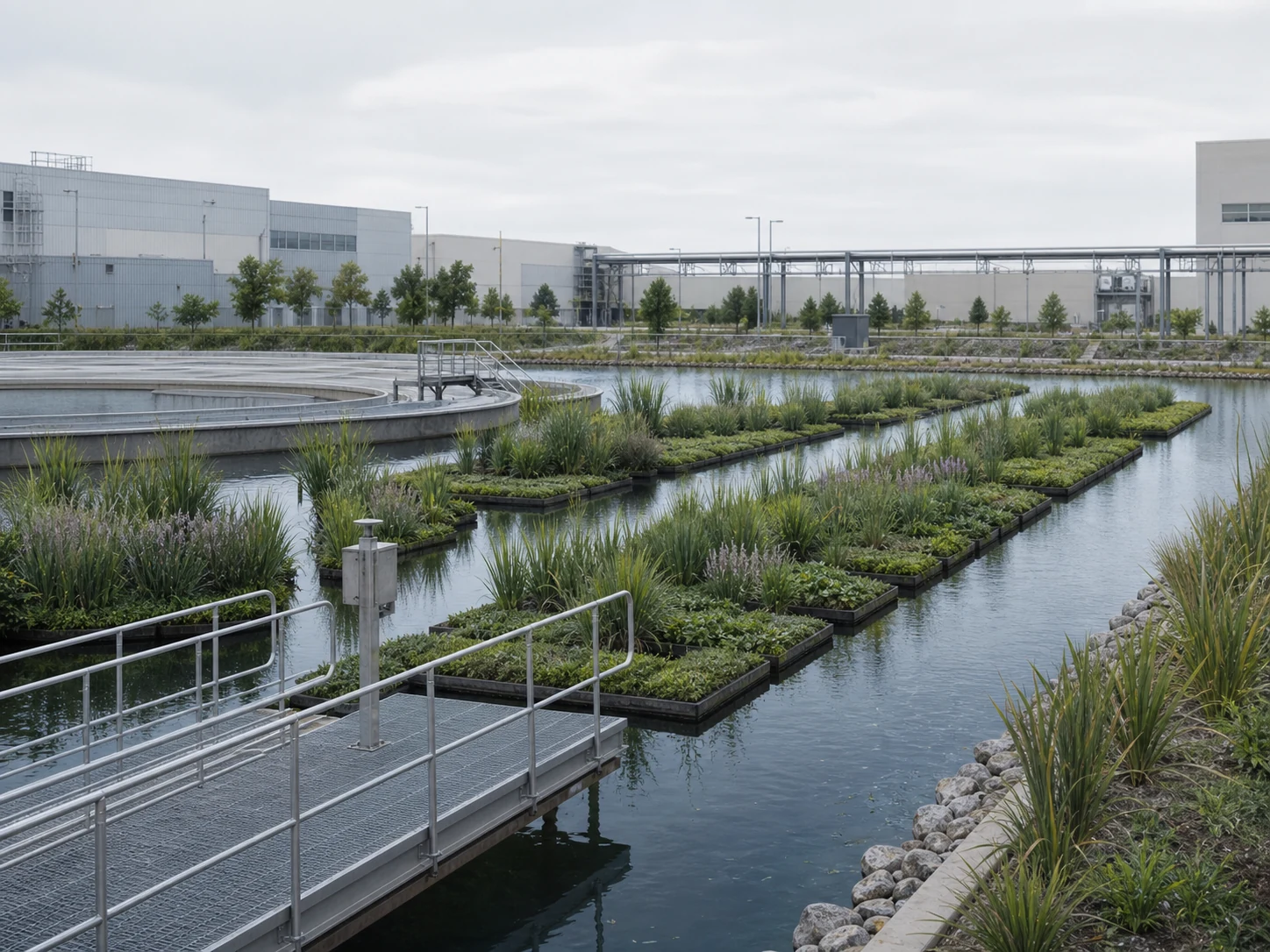
Concept of a floating ecosystem in an engineered industrial waterbody
E

Industrial Sites

Client concern
Engineered basins and operational constraints
Value created
Introduce living surfaces within a broader site strategy
Project response
Robust, accessible configurations coordinated with safety, hydraulics and maintenance
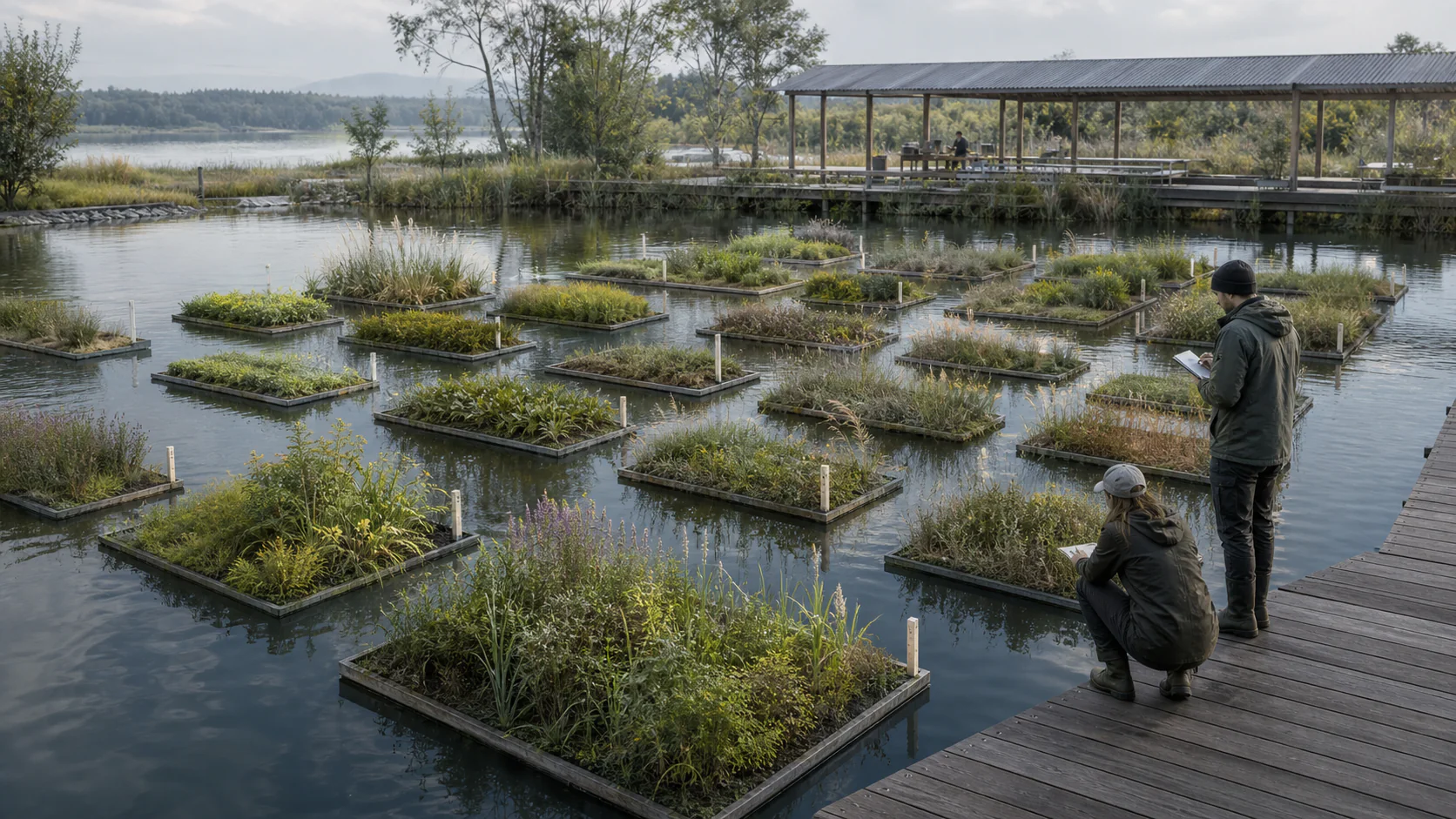
Concept of a floating ecosystem research environment for observation, comparison and iteration
F

Research

Client concern
A need to test and compare in real water
Value created
Support observation, demonstration and iterative learning
Project response
Instrumentable modules, controlled variations and clear monitoring access
05 / Existing landscape retrofit

Keep the waterbody. Change what it contributes.

Artificial lakes, campus ponds, commercial-property water features and waterfront edges can gain new landscape, habitat and engagement value through a targeted, phased intervention.
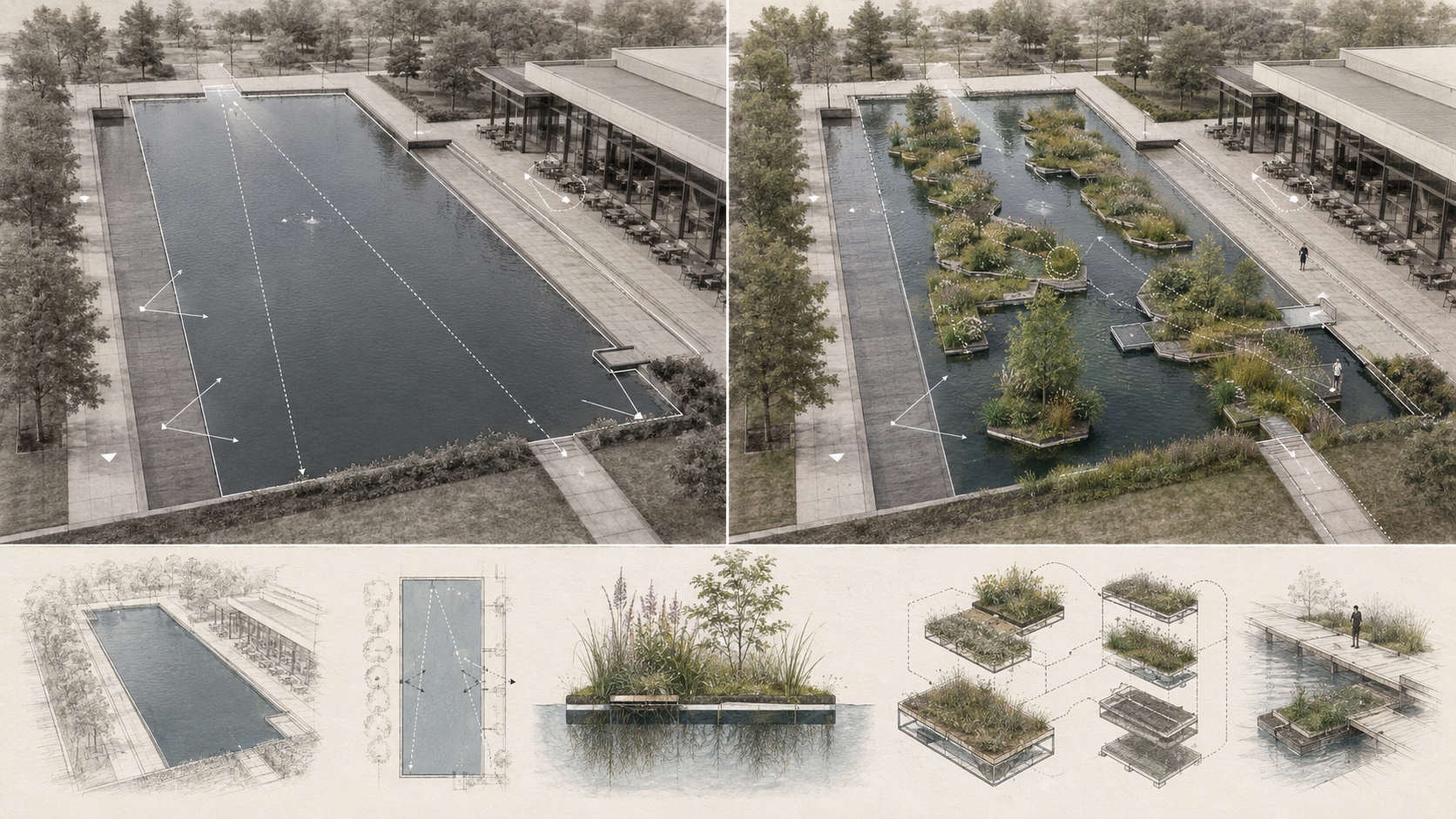
Concept board comparing an existing commercial waterbody with a floating ecological retrofit and modular construction studies
Compare the existing condition and floating ecological proposal for the same waterbody, including module, planting and maintenance-access studies.
  • Retain the existing waterbody and key views
  • Add modular planting and habitat interfaces
  • Coordinate access, operations and maintenance
  • Observe use and adapt the configuration over time

For some clients, this can support a wider landscape or ESG programme; reporting still follows project-specific evidence.

06 / Value in use

What can the waterbody begin to do for the project?

Value is created in use—not by installation alone. These examples show how a designed floating ecosystem may support different commercial, spatial and organisational priorities; actual effects depend on the site and should be observed where they matter.

A destination people notice

At a commercial property or hospitality setting, a distinctive living waterscape can invite people to pause, photograph and share the place—supporting dwell time, visibility and destination identity where the experience is well operated.

A stronger architectural proposition

For architecture and landscape teams, the waterbody becomes part of the design language rather than leftover infrastructure, helping the project offer a differentiated amenity and a clearer relationship between building, landscape and nature.

Environmental action made legible

For corporate and industrial sites, the physical intervention can connect stated nature or biodiversity priorities with field observation and understandable evidence. This can support ESG communication and competitive positioning; it does not by itself guarantee a rating change.

More value from an existing asset

For established parks, campuses and properties, phased modules can add new landscape, habitat and engagement value without defaulting to total reconstruction, while preserving room to maintain, replace and adapt.

07 / Start with the waterbody

Where could a floating ecosystem begin?

Share the site, the project team and the value the waterbody needs to create. We can identify an appropriate role and next step.

Start a Project→