The physical intervention
Site strategy, configuration, structure, planting, habitat and installation.

Designed floating ecological systems for landscapes, habitat and environmental performance that can be observed and assessed over time.
We begin with the site challenge and environmental objective, decide whether floating is appropriate, then connect a physical system with lifecycle care and scientific evidence.
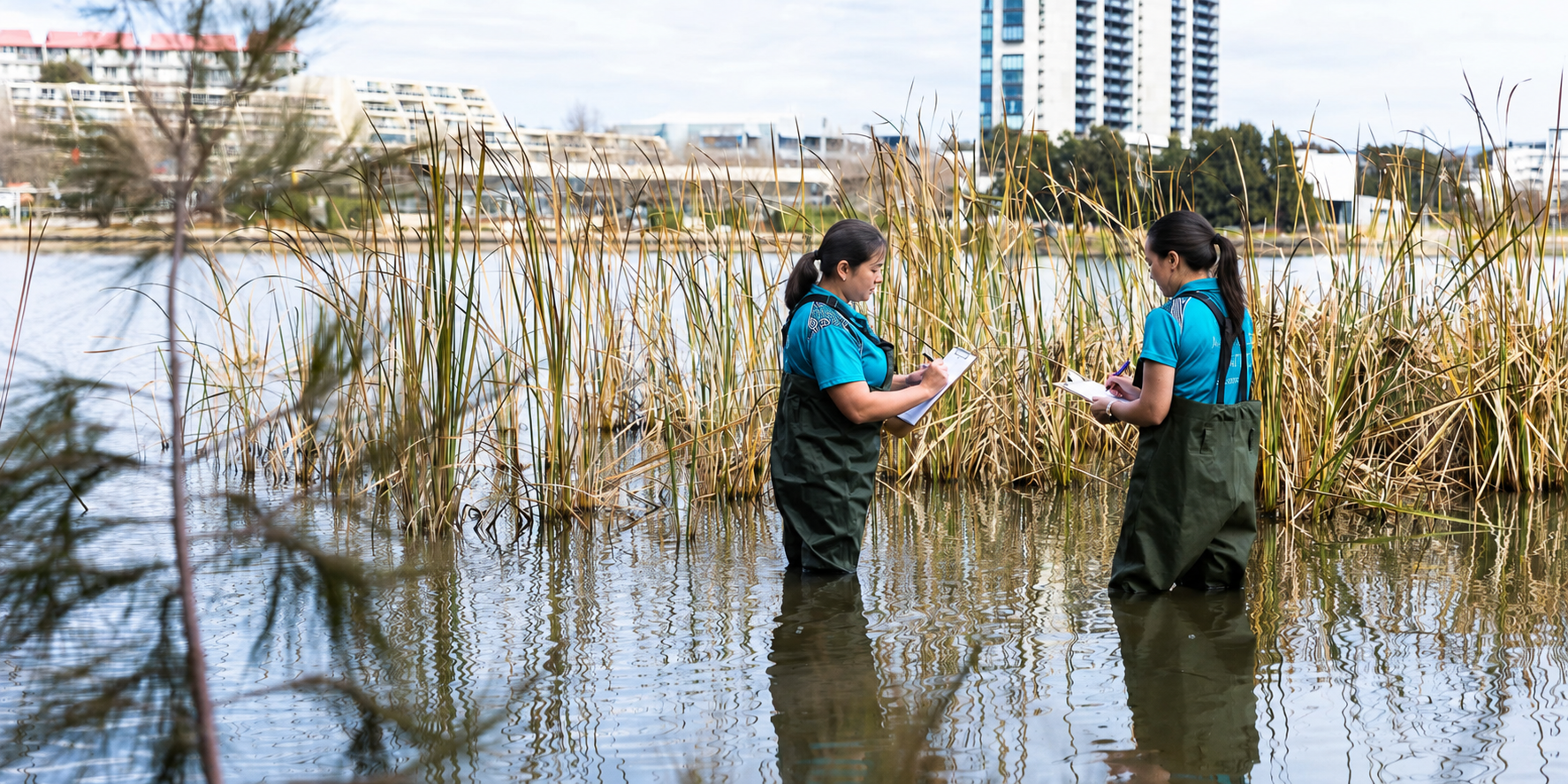
A living system designed to be observed, maintained and understood over time.
Site strategy, configuration, structure, planting, habitat and installation.
Baseline, indicators, establishment, maintenance, ecological observation and adaptation when needed.
Data, environmental performance assessment, technical and executive reporting, and communication-ready figures.
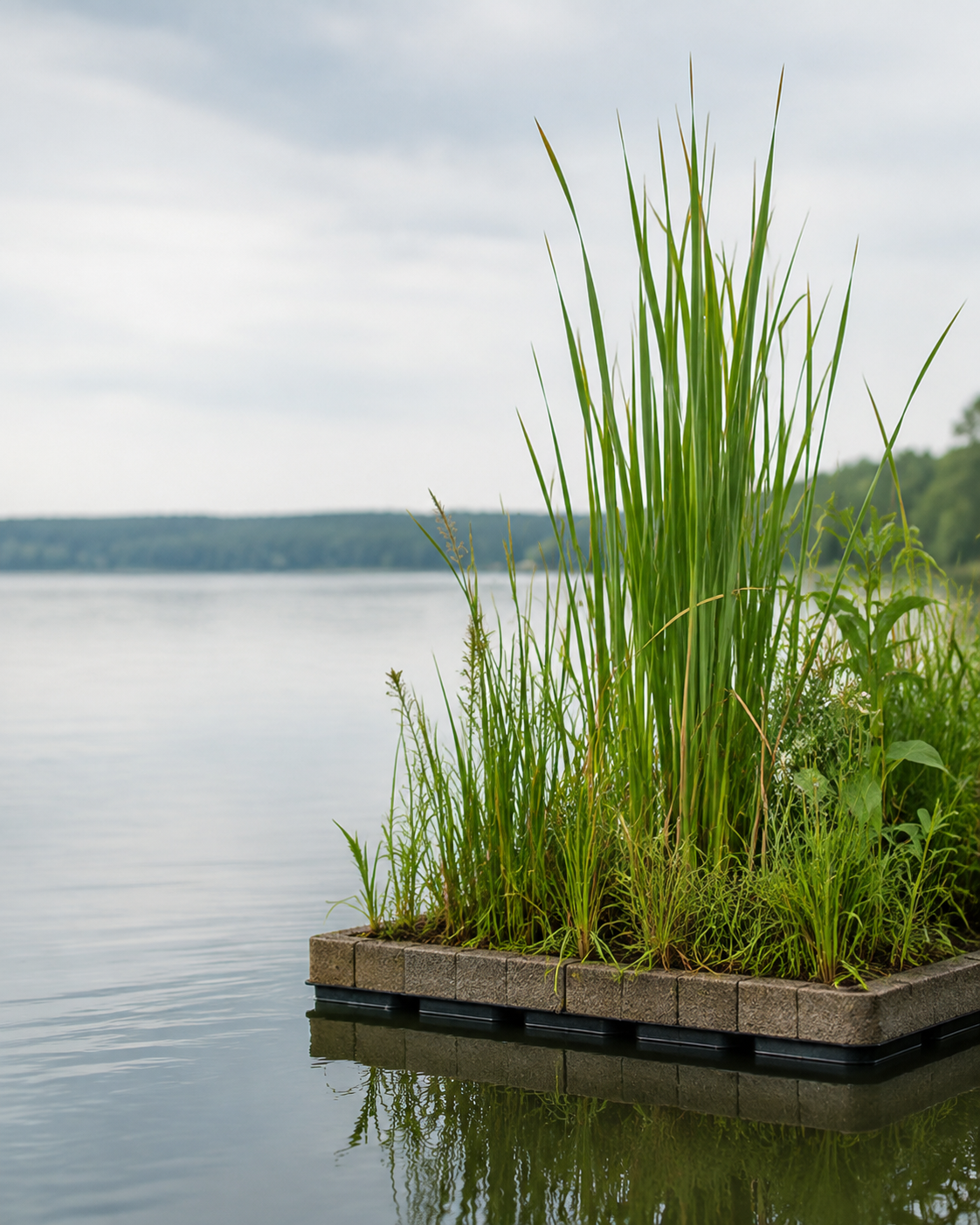
Adaptable configurations for varied waters and design visions.
Explore design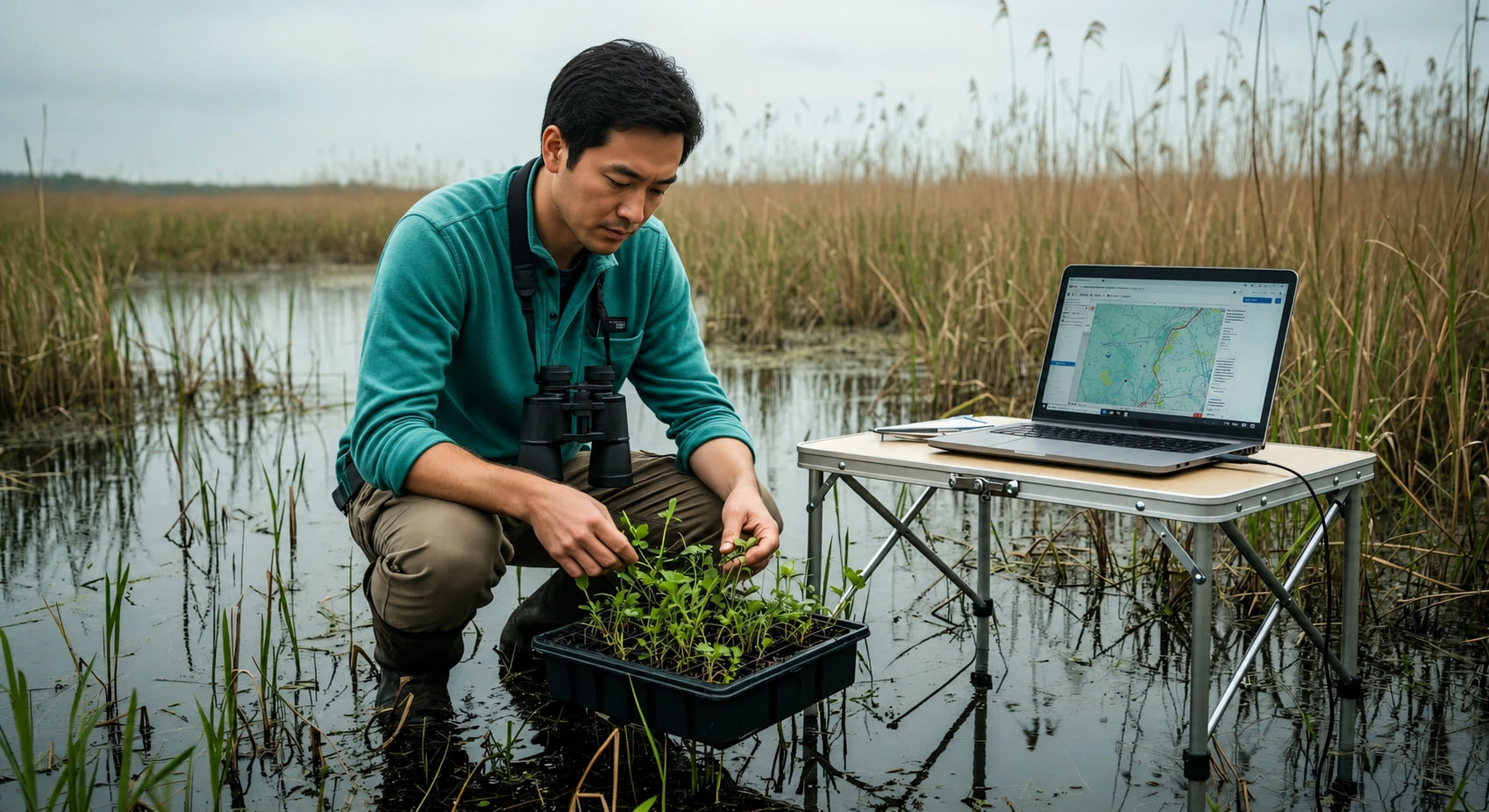
Turn observation and assessment into clear outcomes.
See the evidence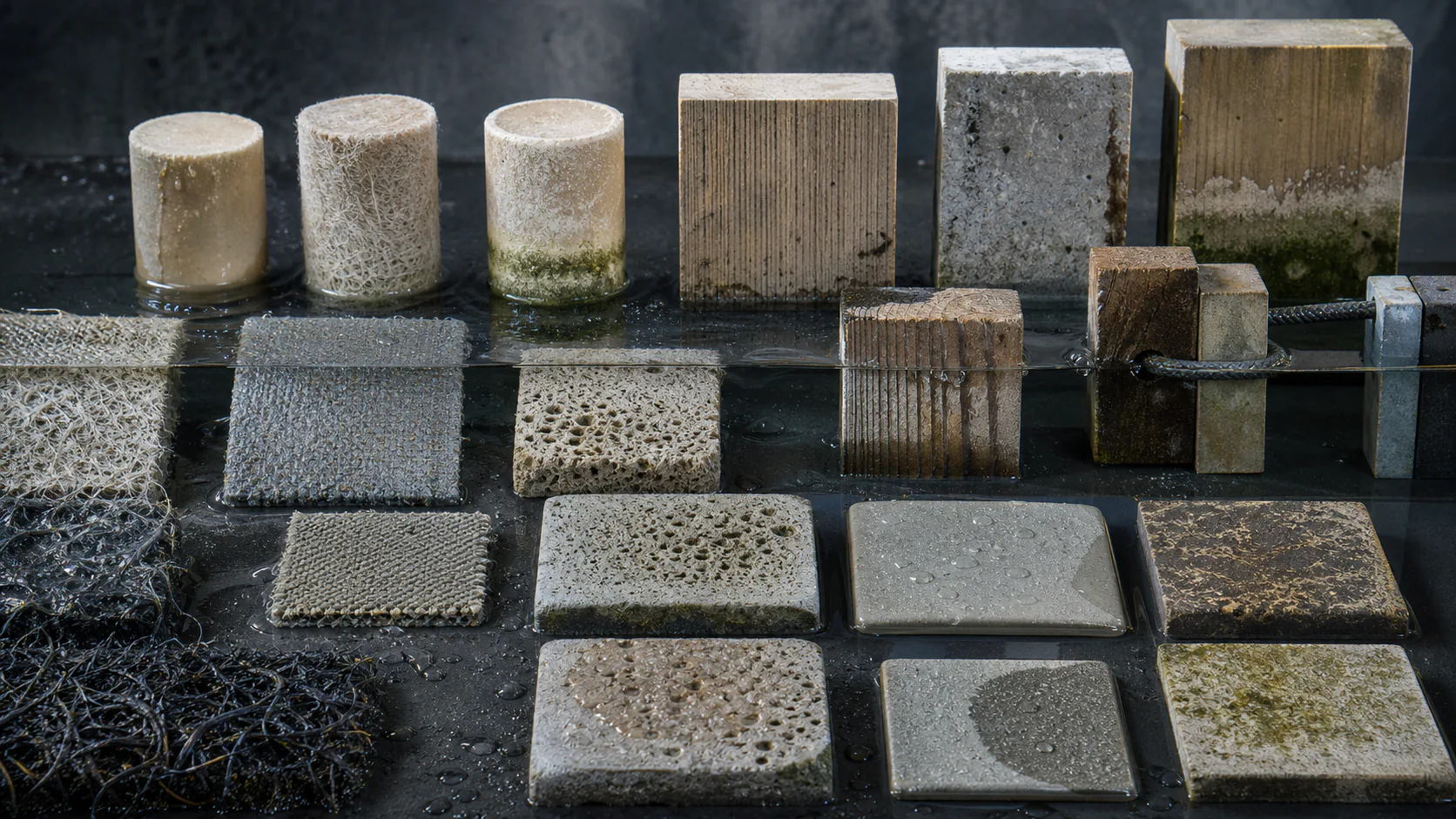
Balance renewability, durability and care.
Explore materialsWe care not only about what is built, but what changes after installation. A project-specific baseline, ecological observation and assessment make the system's environmental performance understandable over time.
Not only creating habitat, but observing how ecological indicators change.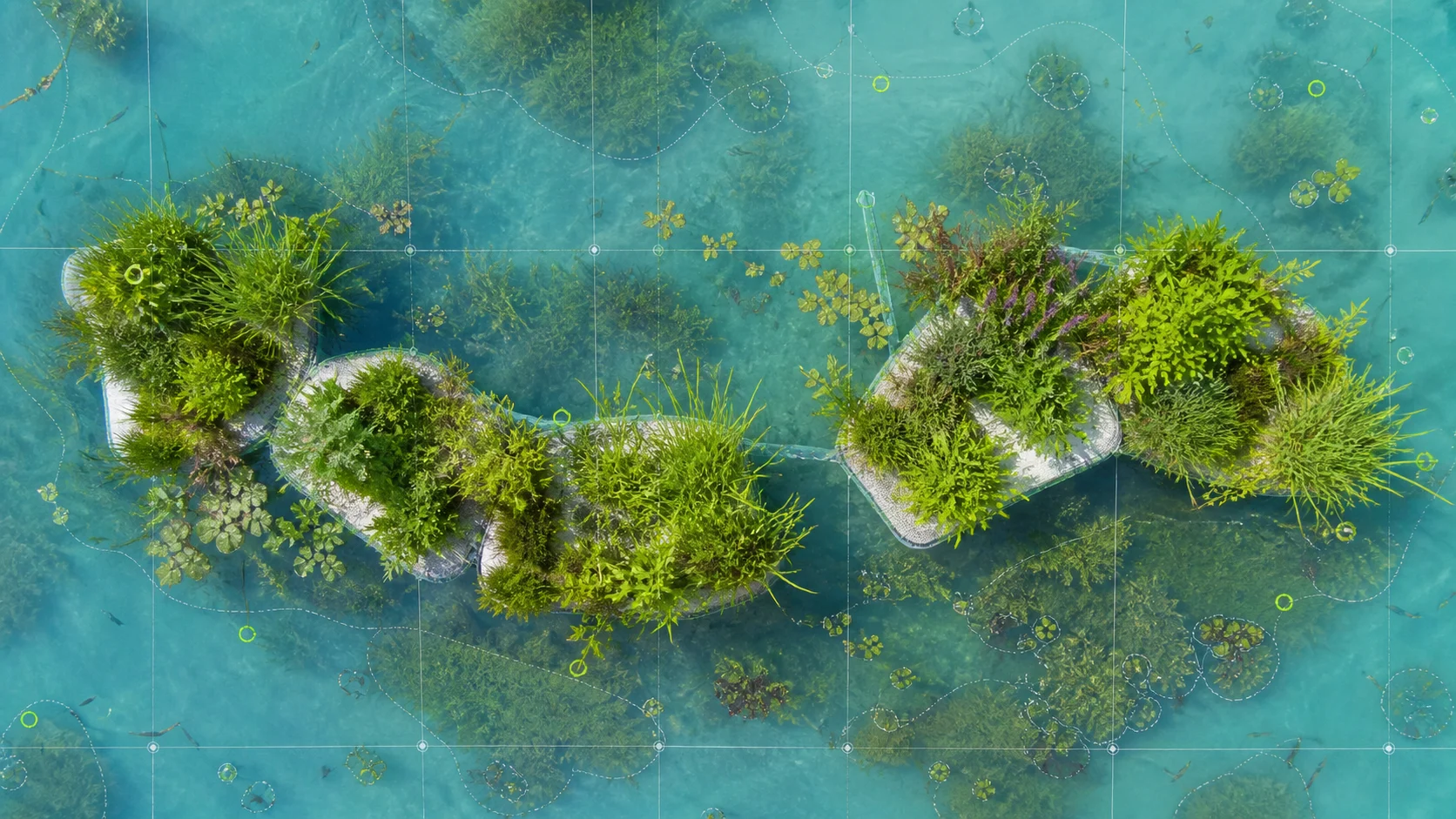 LOCAL SYSTEM AREAHABITAT PATCHES
A designed entity on the water—not a monitoring buoy or a consulting-only service.
Environmental science follows the same system through its project lifecycle.
A floating system earns its place where it can add habitat and landscape without making heavy bottom works the default. It is not automatically the best answer for every waterbody.
If a fixed structure is simpler and more appropriate, we do not force the project to float.
Each layer has a different role. Together they create buoyancy, support planting, shape habitat and allow the system to adapt over time.
Explore the system→Selected for ecology, climate, landscape character and site conditions.
A porous interface that supports plants, roots and exchange with the water below.
The structural core balances flotation, durability, maintenance and material impact.
Roots and submerged surfaces create complexity for aquatic organisms and biofilm.
Above the surface, planting becomes landscape. Below it, roots create a living interface between water, microorganisms and aquatic life.

Standardised components can be arranged into different spatial and ecological compositions, responding to site, planting and design intent.
Explore design possibilities→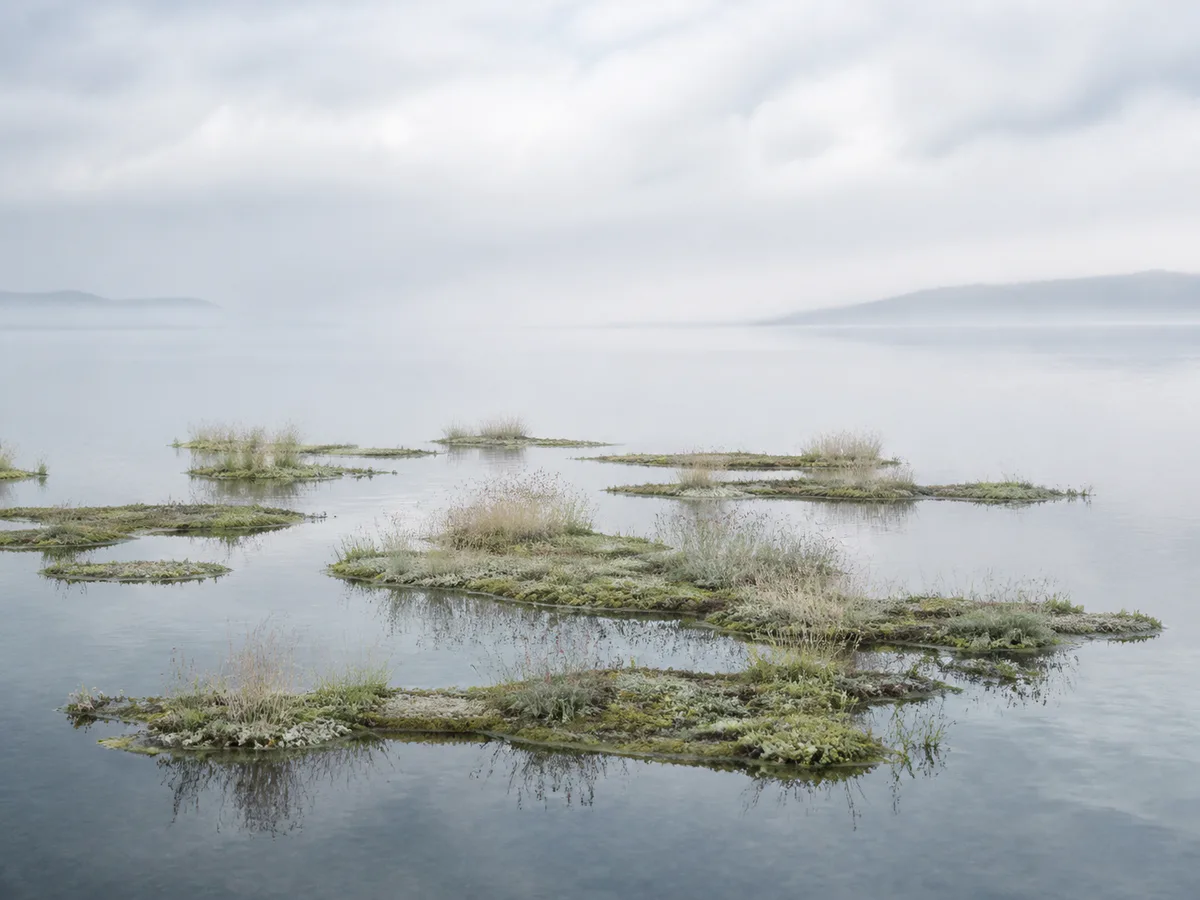
Broad, low-profile planting for calm water surfaces, open views and subtle ecological edges.
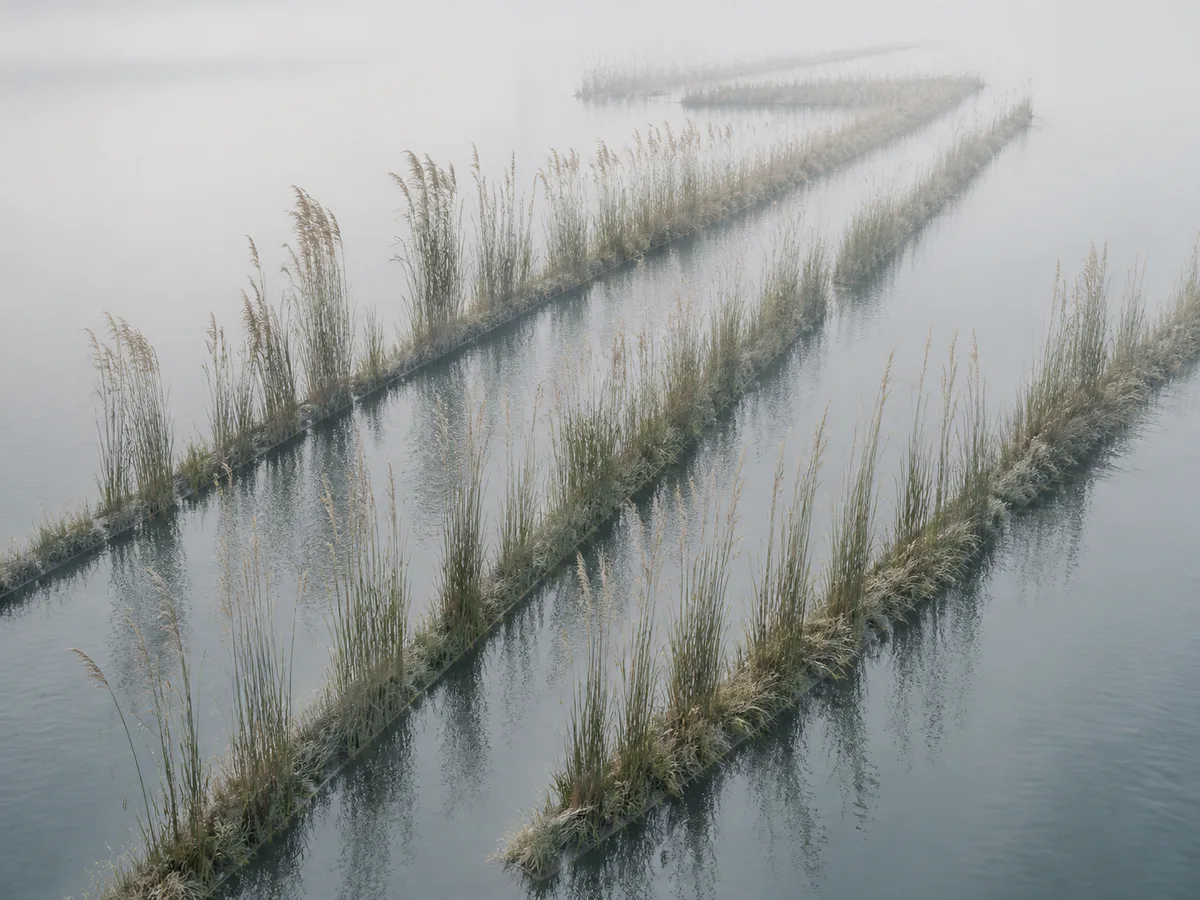
Taller planting creates movement, seasonal character and stronger visual presence along the water.
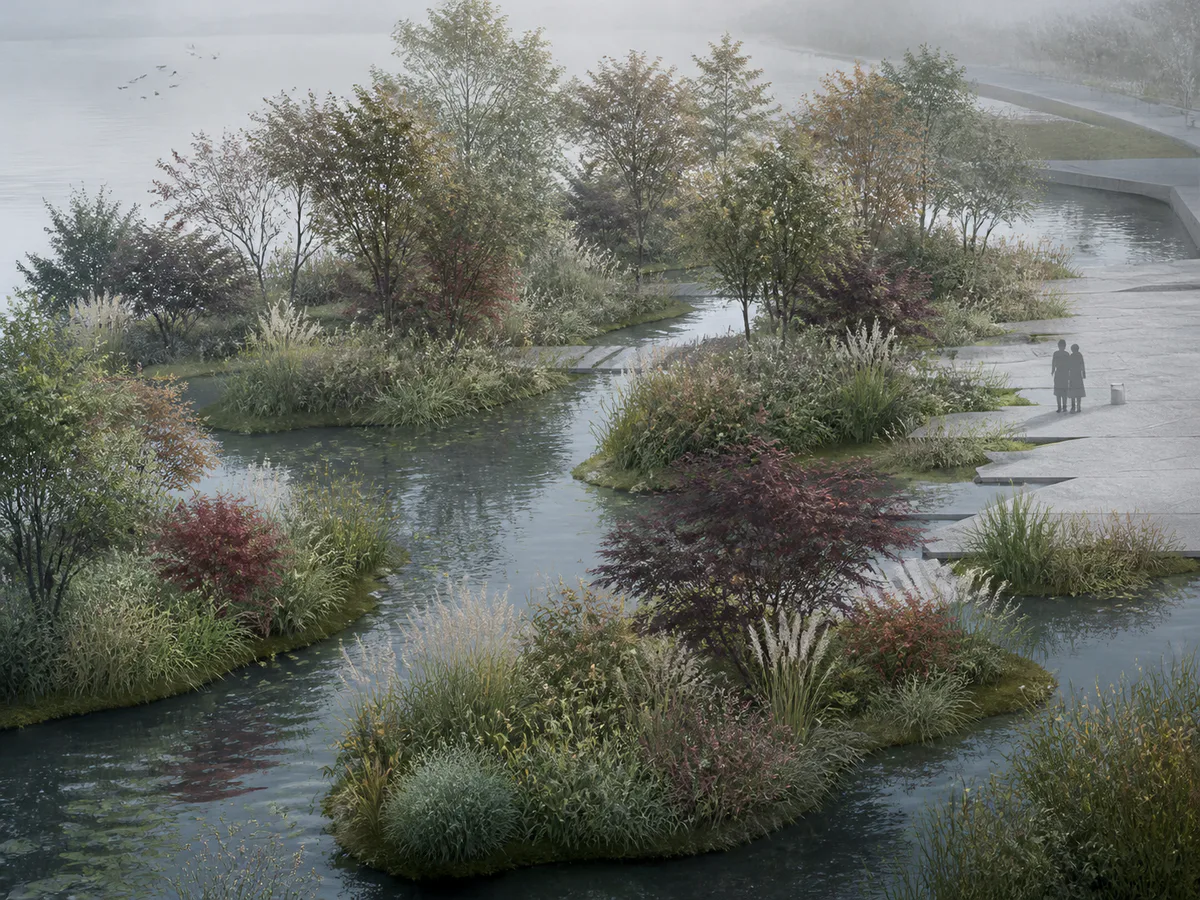
Richer planting palettes for parks, waterfronts, commercial landscapes and public-facing spaces.
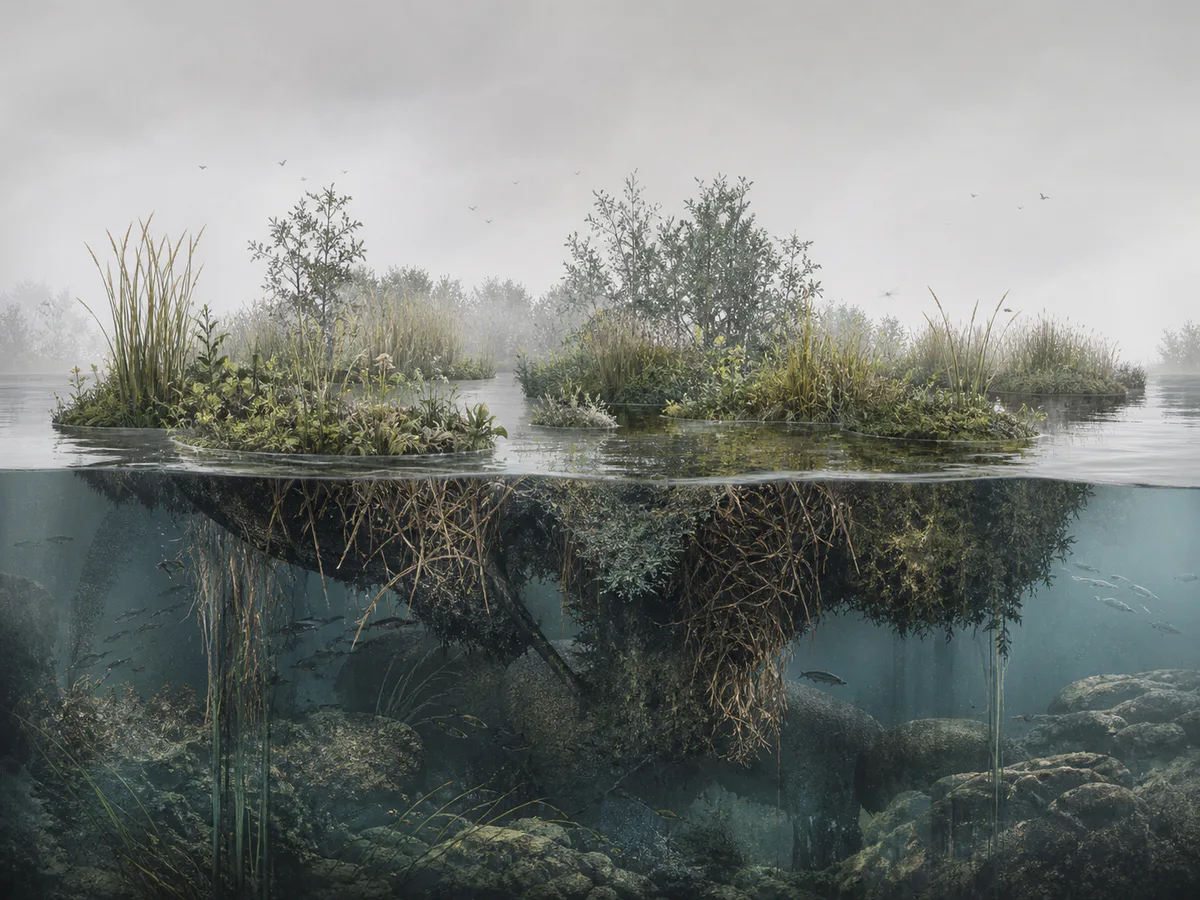
Greater ecological complexity above and below water, with habitat value placed at the centre of the design.
The questions and indicators are defined for each site. Biodiversity is our flagship direction; water environment is one relevant dimension, not the system's sole purpose.
Observe species richness, community change and habitat use where the method and project timescale allow.
Assess ecological interfaces, planting structure, root zones and habitat complexity above and below water.
Monitor site-appropriate water indicators when they are relevant to the project's objectives.
Follow material condition, ageing, maintenance, replacement and recovery across system layers.
Where relevant, study use, perception, participation and time spent at the water's edge.
Not only creating habitat, but observing how ecological indicators change.
Performance indicators are selected according to each site's baseline and project objectives. No universal score is applied.
A structured project deliverable that turns baseline, monitoring and assessment into clear technical and visual communication.
PROJECT OUTPUTSSustainability is not about forcing every component to remain unchanged forever. It is about designing each layer to perform, renew, adapt and eventually be replaced or recovered responsibly.
Explore our material approach→Plants and roots grow, change and renew. Their value comes from being alive, not permanent.
Selected natural or renewable materials can support establishment and be replaced when their role is complete.
Structural elements should last where long service life meaningfully reduces maintenance and total material use.
Components should be separable, maintainable and recoverable wherever practical, rather than becoming one inseparable object.
Floating ecosystems can respond to different water environments and project objectives, from habitat creation and landscape enhancement to ecological retrofit and research.
Explore applications→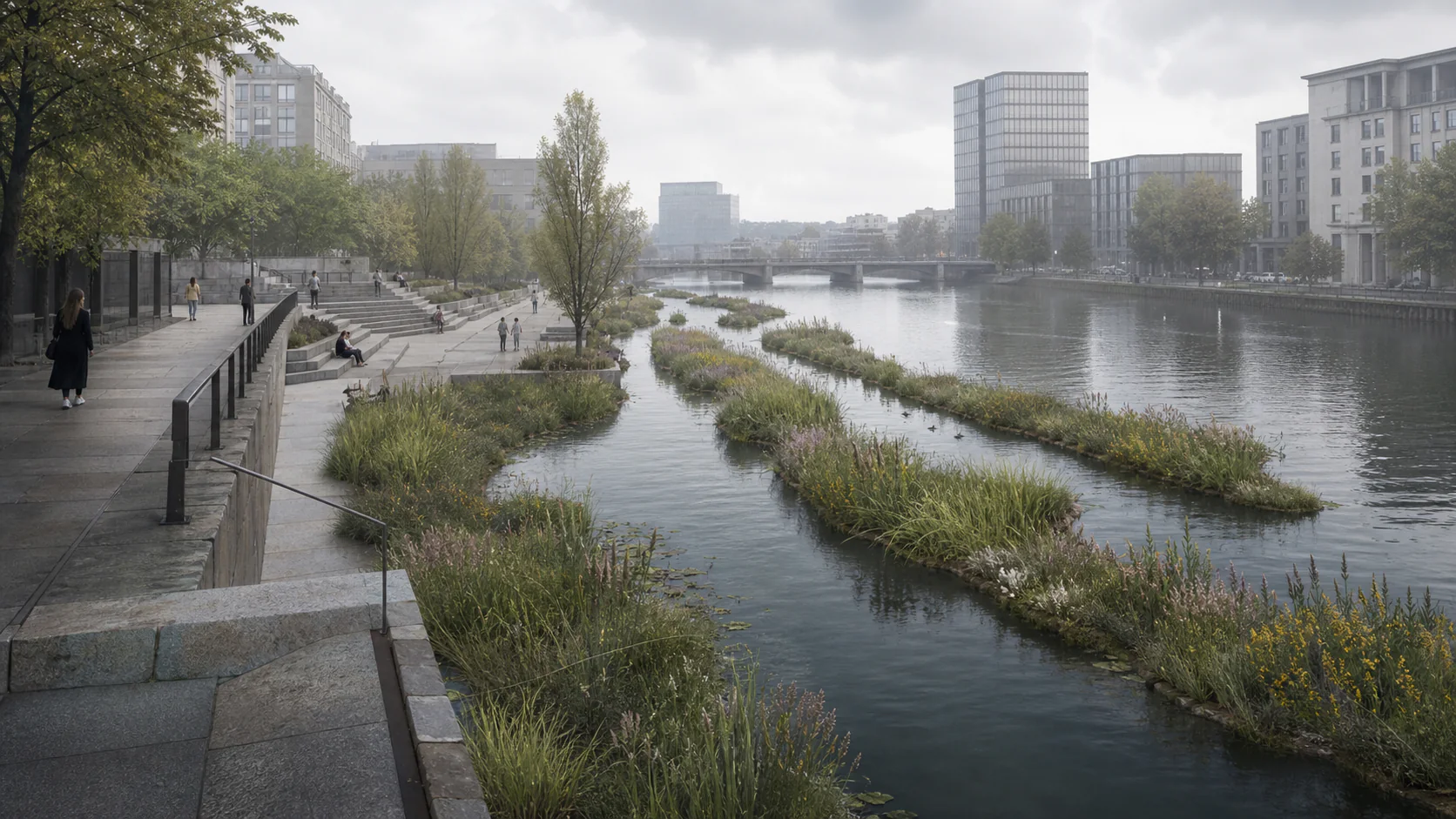 Concept visualization
Introduce habitat, planting and ecological edges into hard-lined or highly engineered river corridors.
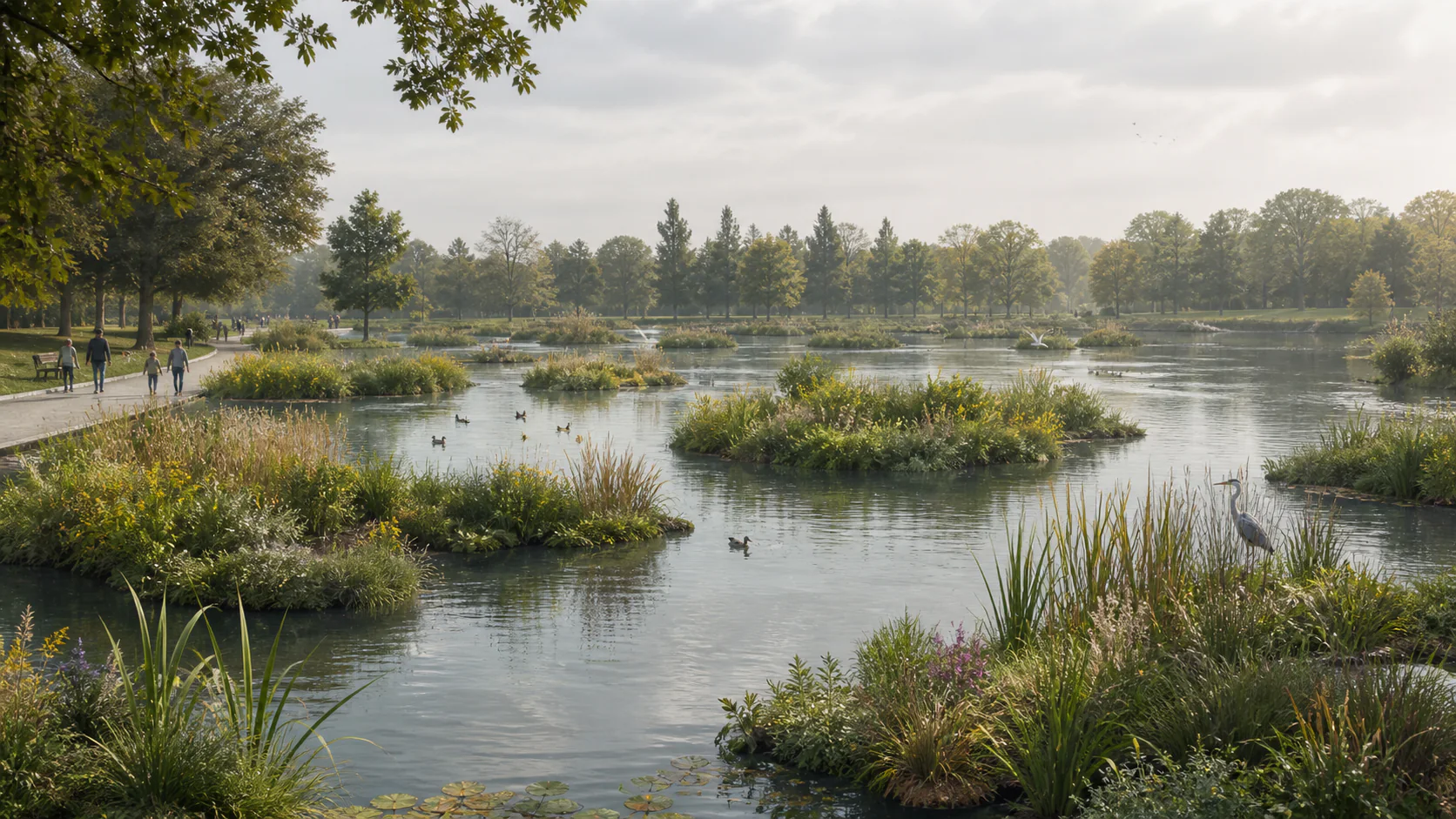 Concept visualization
Add ecological complexity and seasonal planting to parks, campuses, communities and landscape waterbodies.
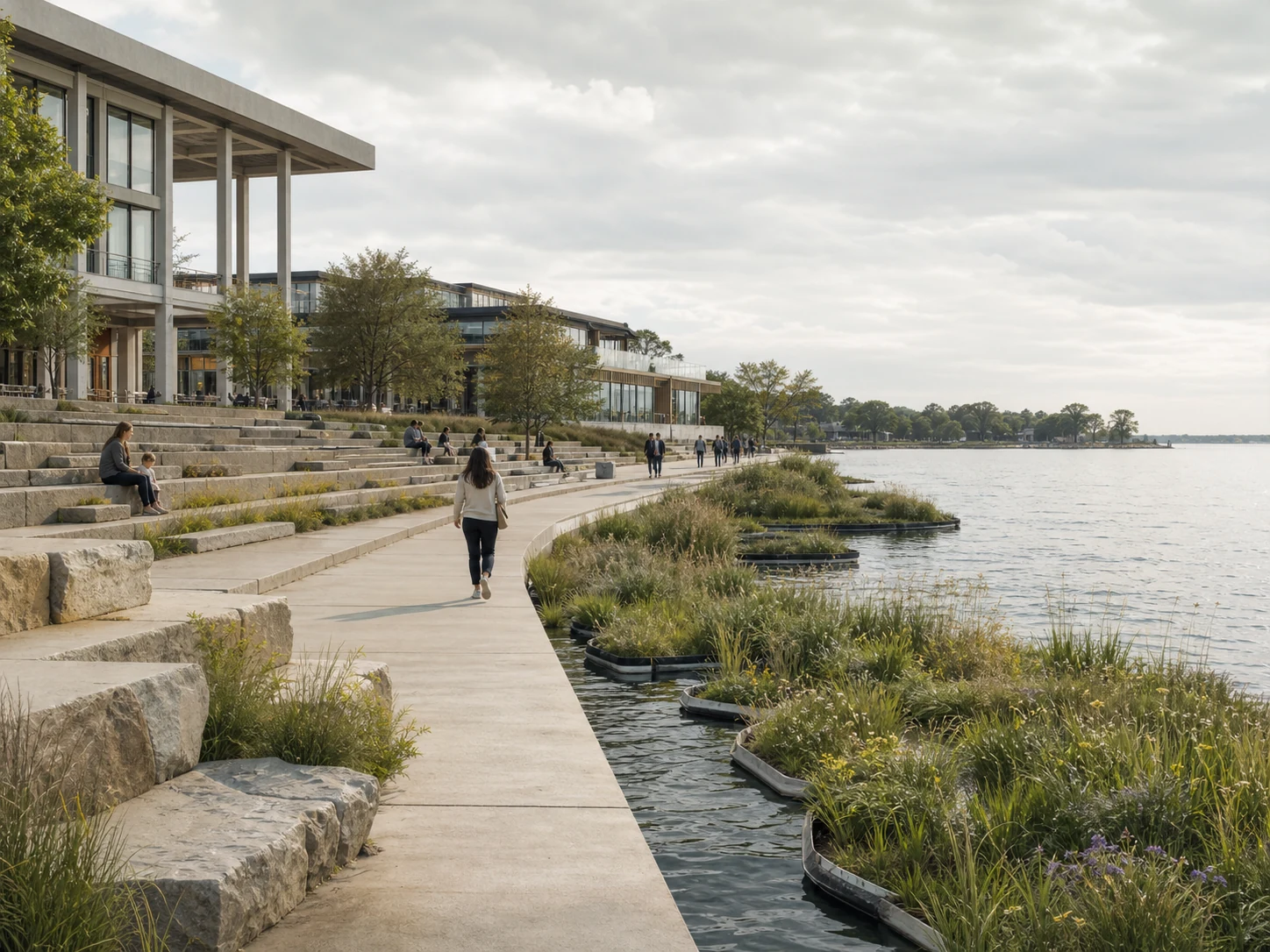 Concept visualization
Create a softer ecological interface between public space, architecture and the water.
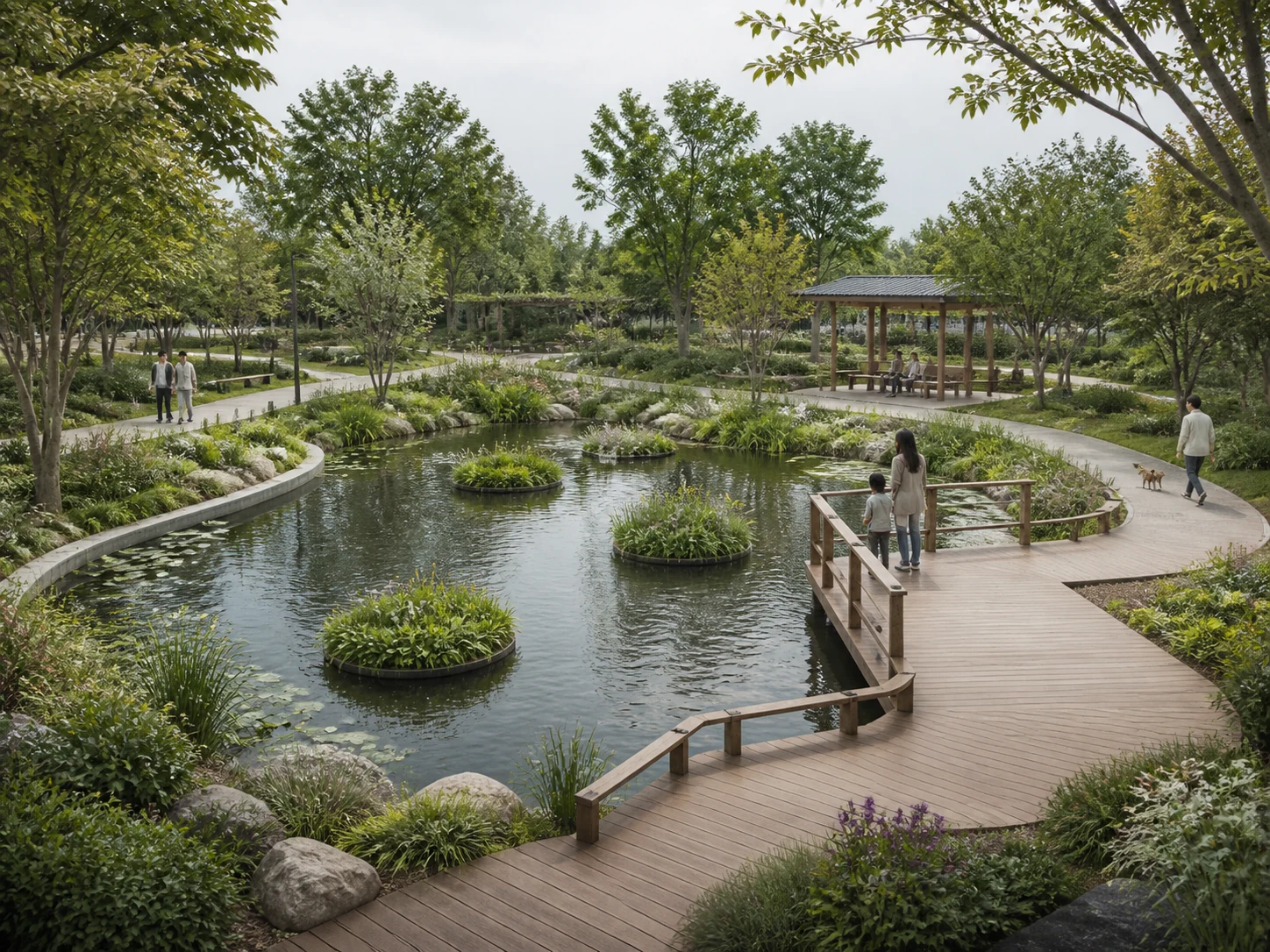 Concept visualization
Combine ecological value with landscape experience, planting design and environmental interpretation.
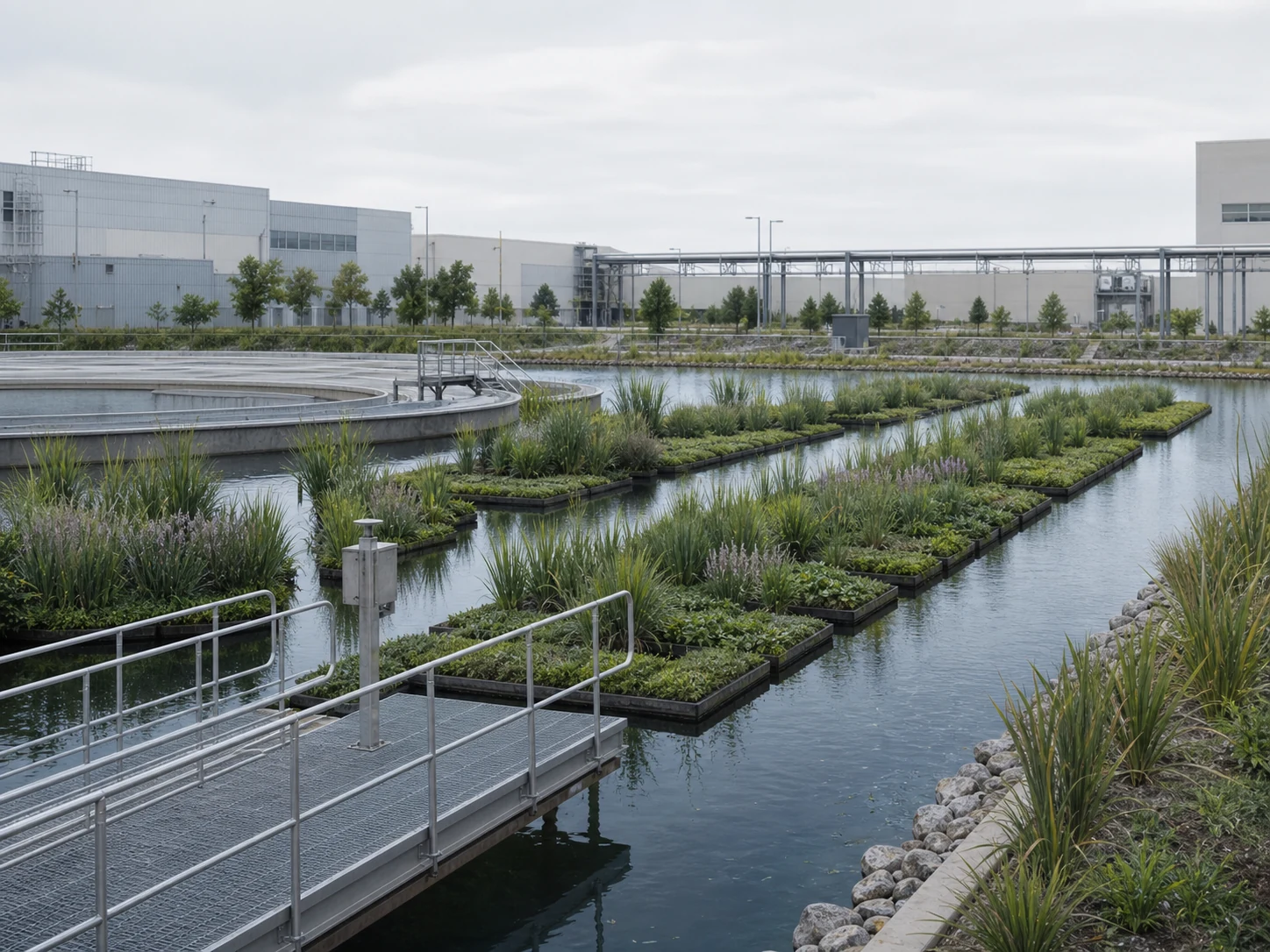 Concept visualization
Integrate observable ecological infrastructure into industrial parks, treatment ponds and demonstration landscapes.
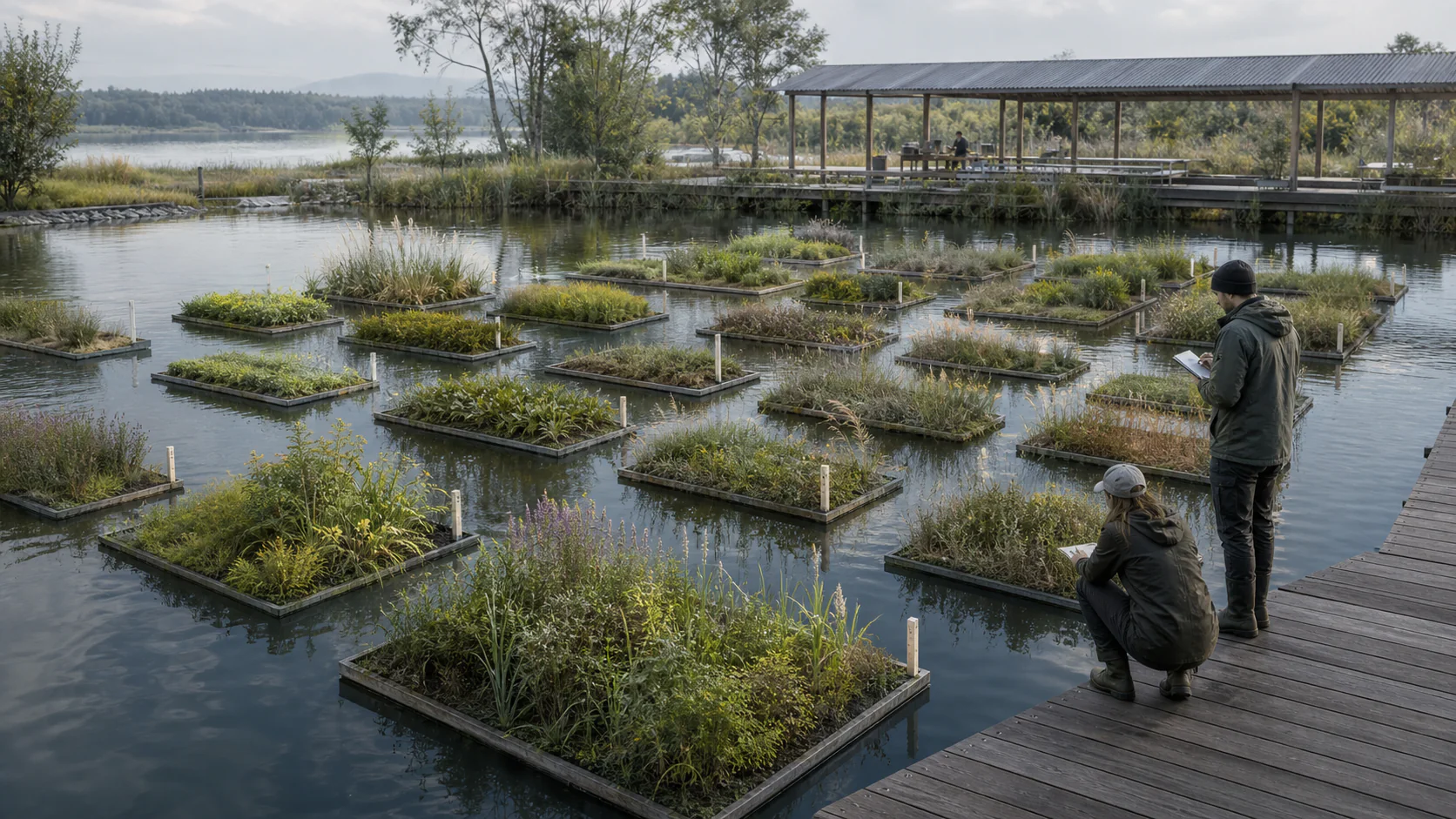 Concept visualization
Support pilot projects, monitoring, material testing and new forms of floating ecological infrastructure.
We distinguish design intent from evidence through material studies, prototypes, plant trials and continued observation in real water environments.
Enter the Lab→Comparing renewable, natural and engineered materials for structure, durability and environmental performance.
Measuring displacement, stability and changes in performance as materials interact with water over time.
Studying moisture uptake, drying, protection strategies and long-term behaviour in aquatic environments.
Testing planting systems, root development and species performance without conventional plastic planting baskets.
Exploring modular connections, repairability, anchoring and scalable ways to assemble the system.
Observing how prototypes change over days, months and seasons in real water conditions.
Tell us about the site, the challenge and what you hope the water could become.
Start a conversation→