01
Field planting
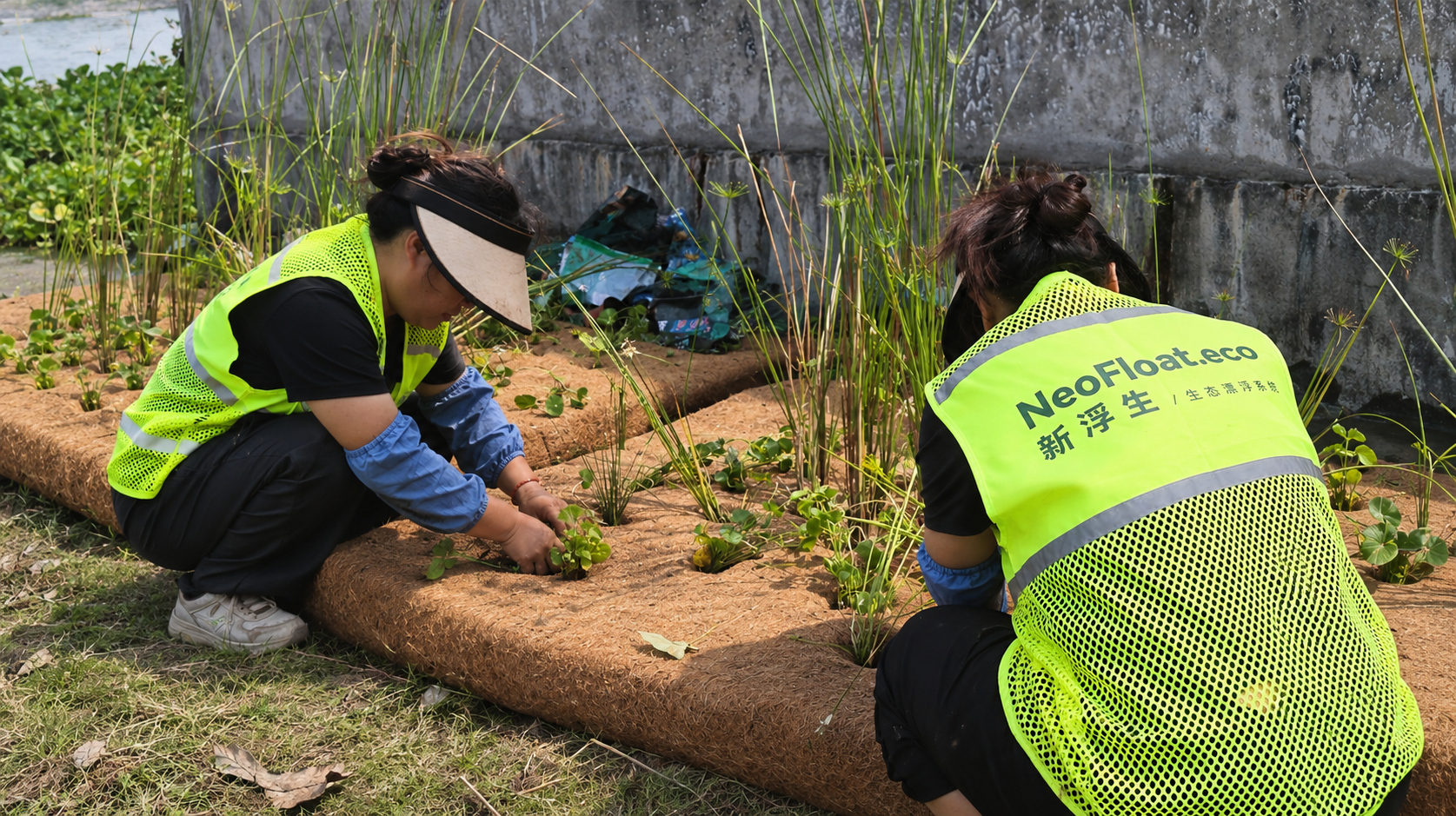
Planting, fibre-based modules and connections are organised and checked before deployment.
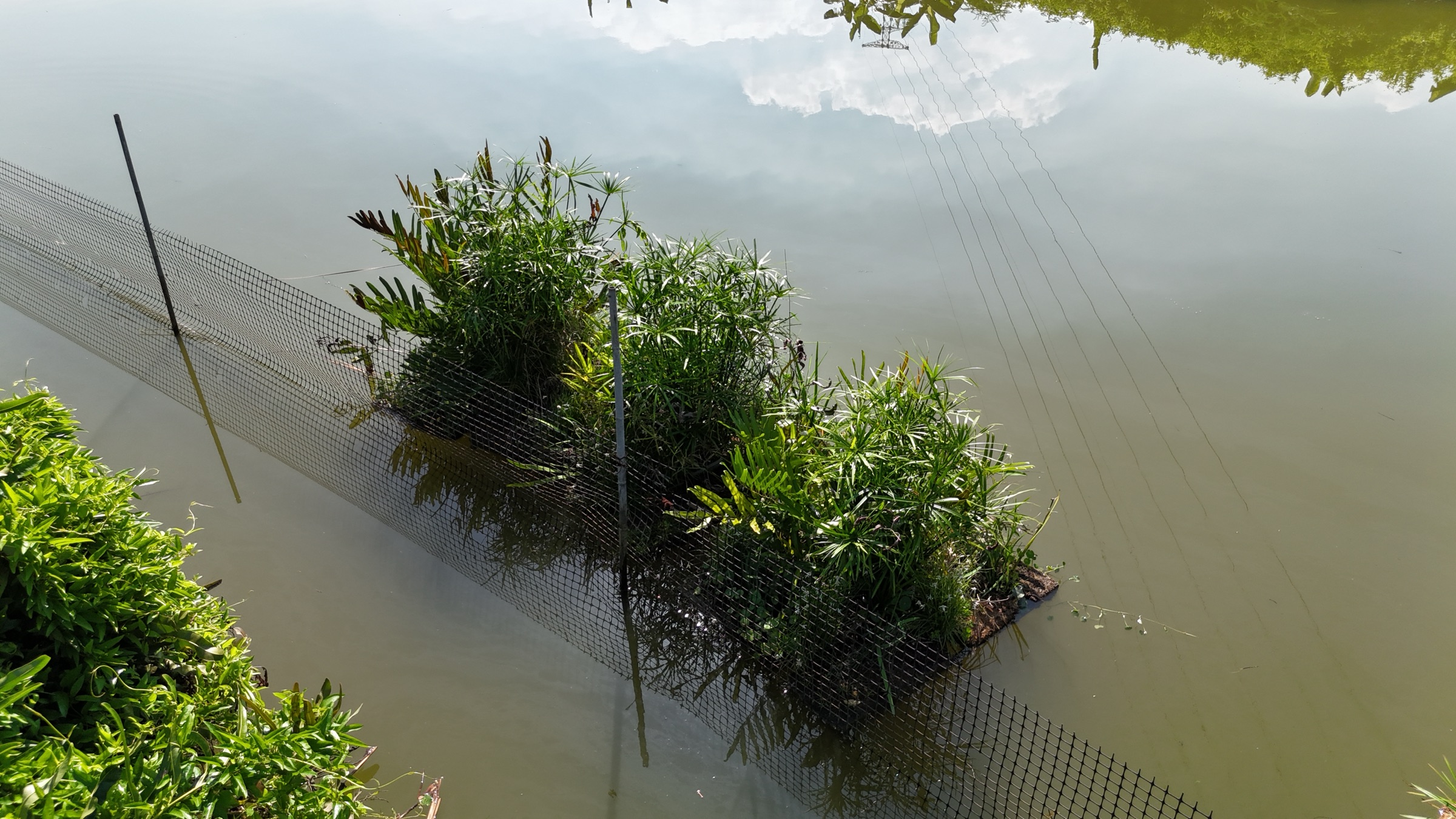
These photographs document planting, deployment and in-use conditions—showing how the system enters a waterbody and establishes a real starting point for observation and care.
The photographs below come from actual planting and waterbody sites. We state only what the images support and do not infer unmeasured ecological or water-quality outcomes.
Planting, fibre-based modules and connections are organised and checked before deployment.
Once deployed, plant growth, module condition and the relationship to the bank can be observed over time.
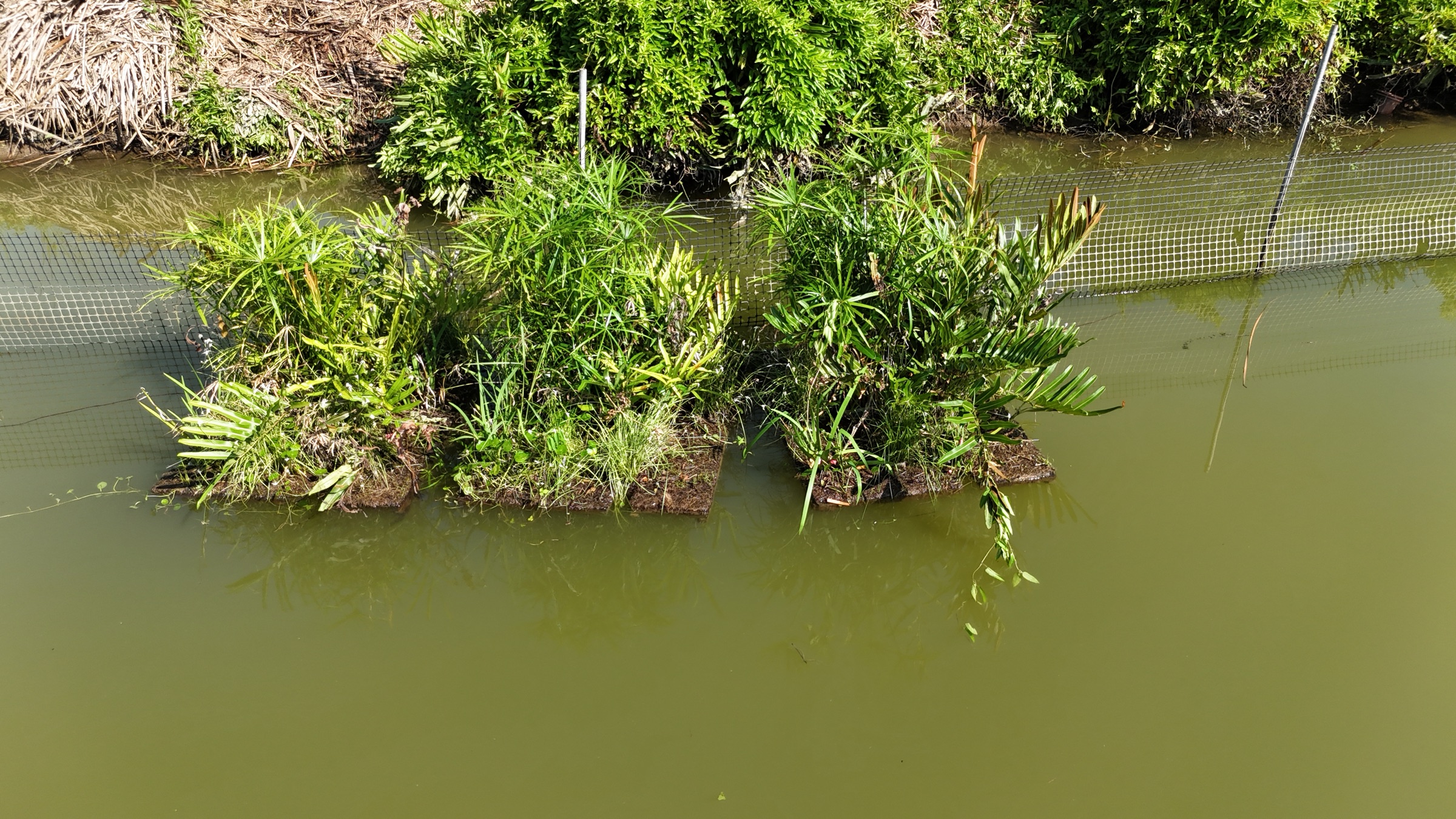
Close observation helps identify plant condition, module edges, connections and maintenance needs.
Note: these field records document materials, planting, deployment and observable condition. Any conclusion about biodiversity, water quality or environmental performance still requires a project-specific baseline, method and continuing evidence.
Some common hollow-plastic modules can quickly form a planted surface, but weathering, local damage, water ingress, maintenance and eventual recovery need to be considered from the start.
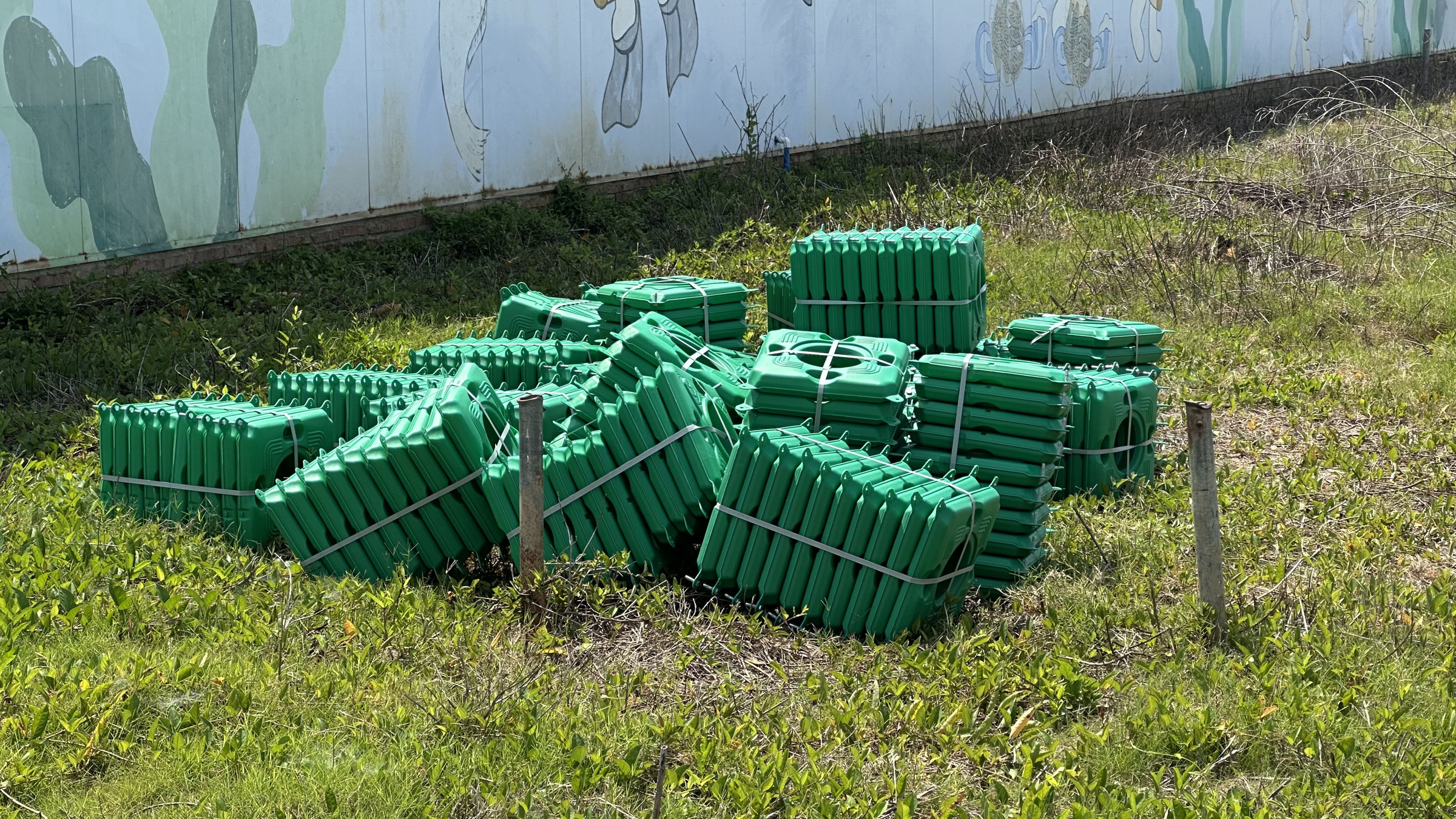
Sealed plastic chambers provide buoyancy, while a regular grid enables rapid assembly.
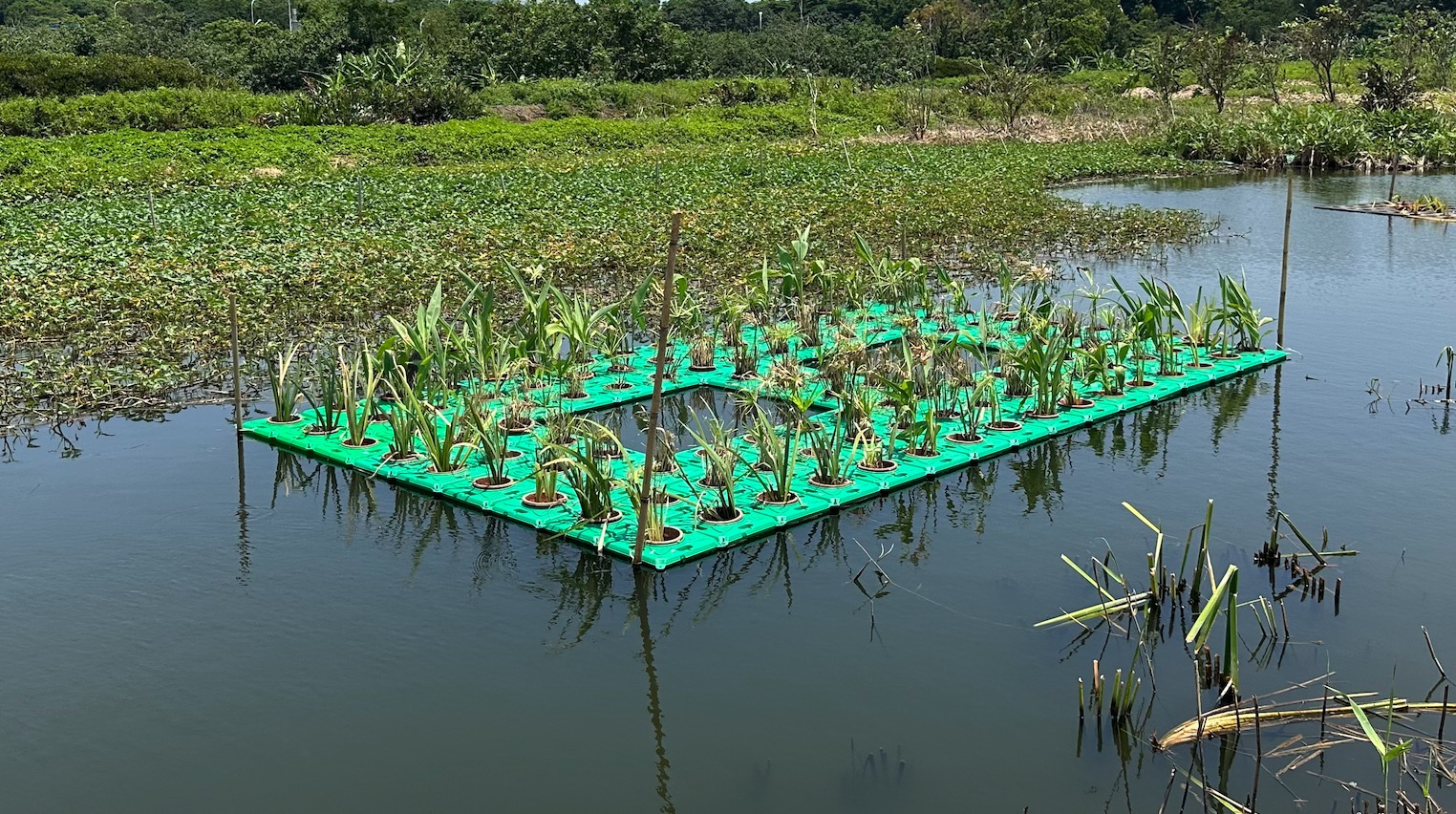
Sun, changing water levels and maintenance activity continue to act on modules and connections.
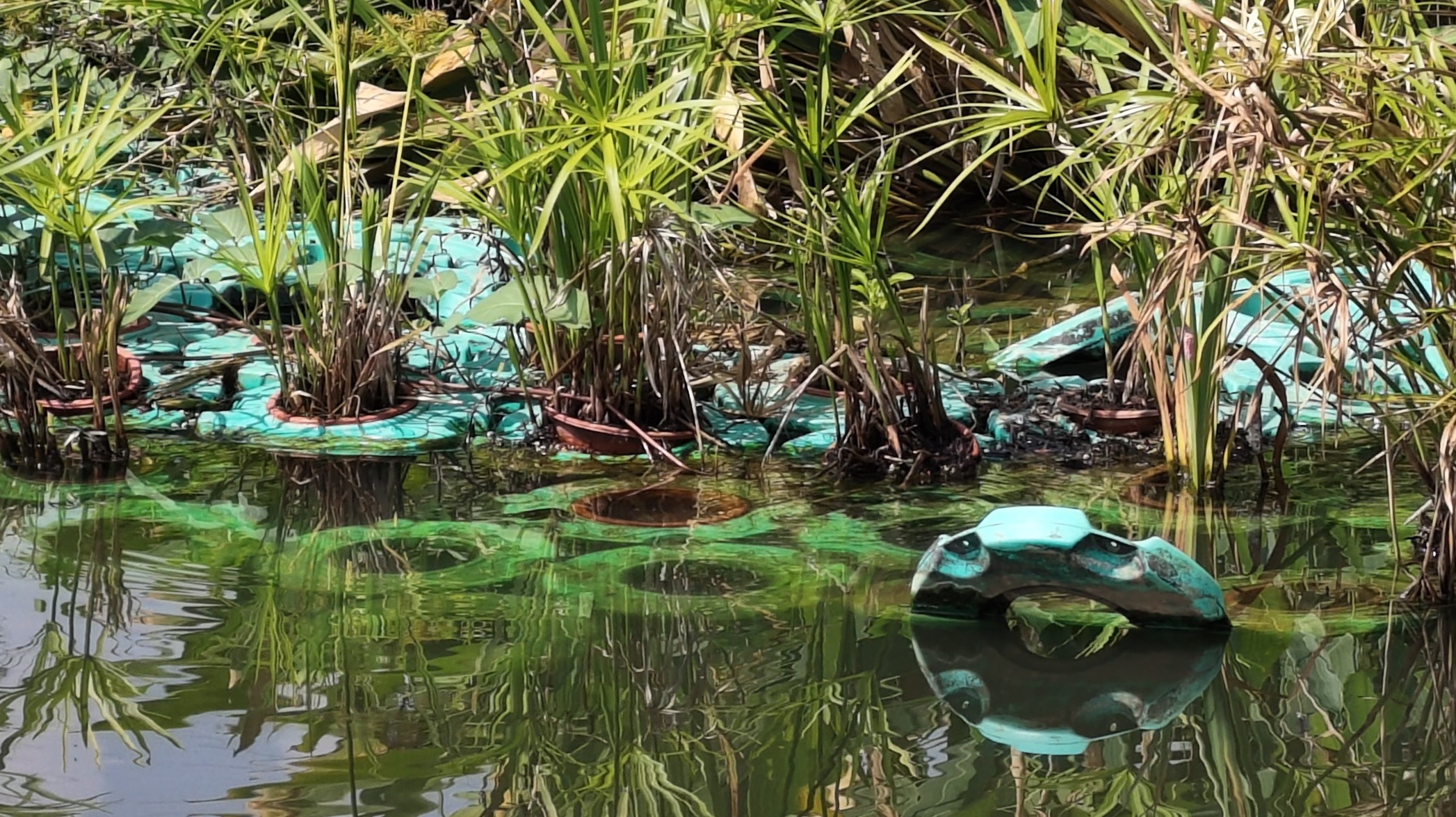
Surface weathering or local damage can affect appearance, connections and future care.
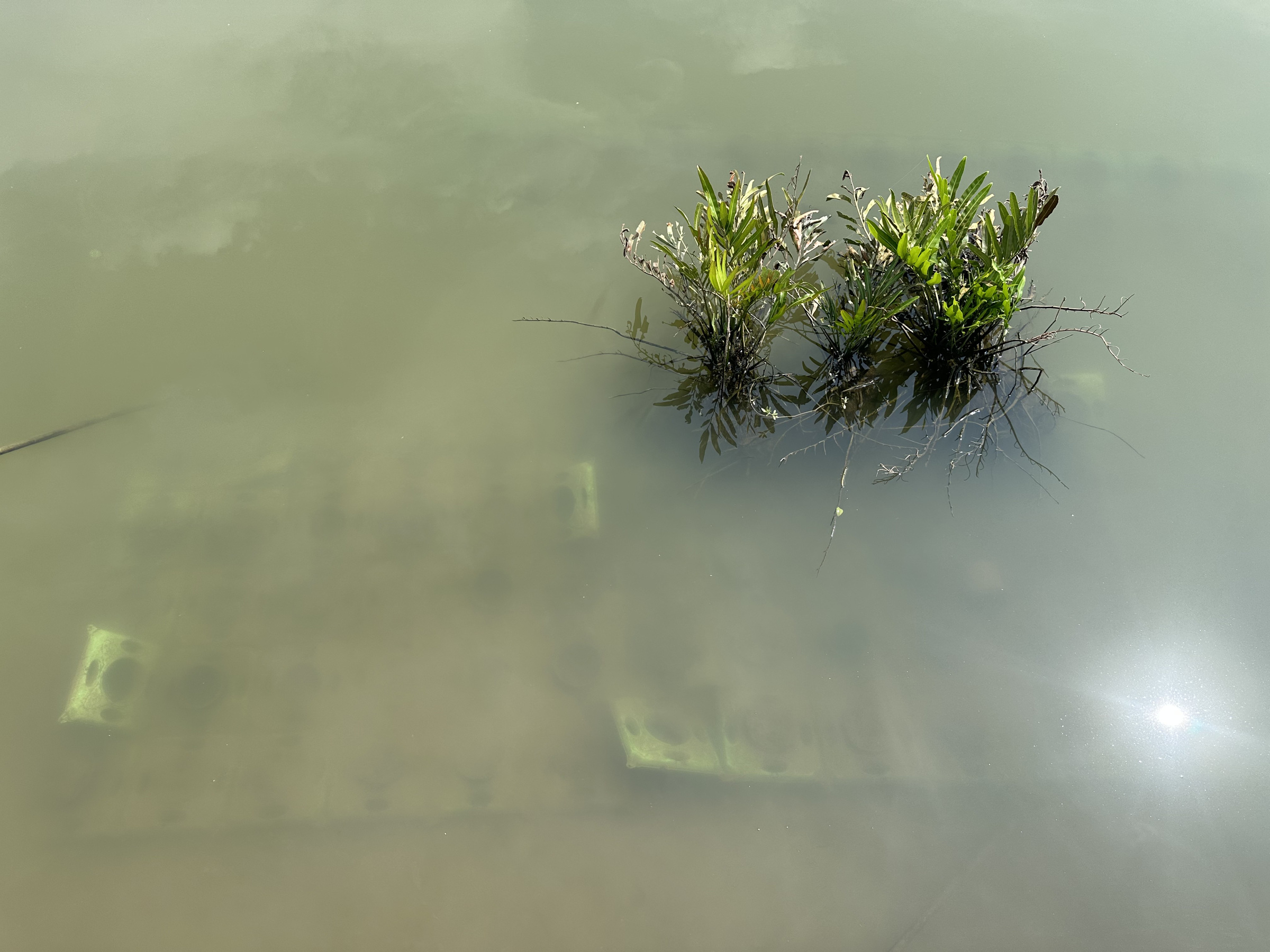
A damaged chamber may take on water and lose buoyancy, making recovery more difficult.
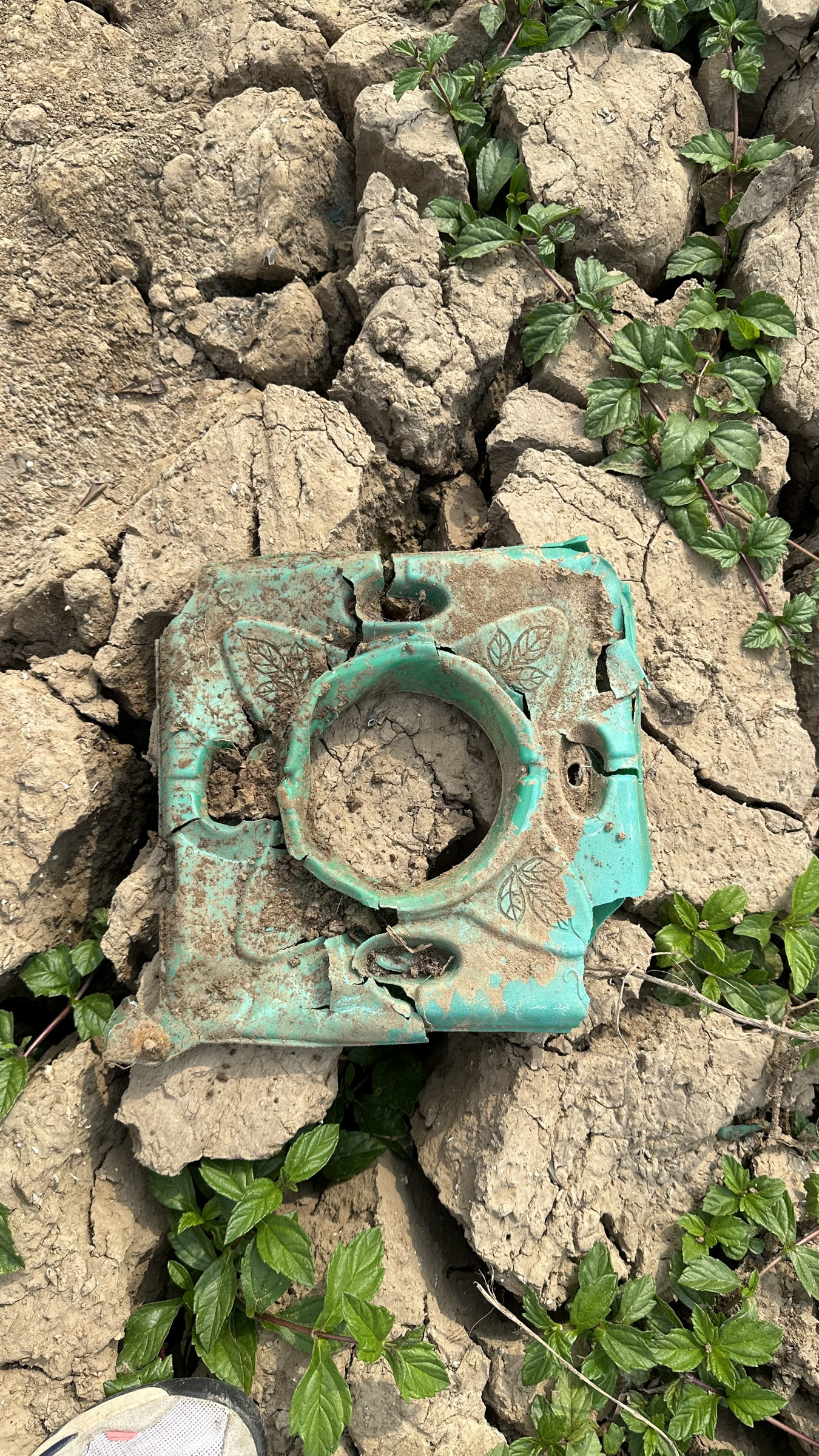
Plastic that is not recovered may persist or fragment, creating a risk of secondary pollution.
The photographs are arranged by visible condition to explain possible lifecycle issues. They are not a time series of one installation, and they do not imply that every conventional floating island follows the same outcome.
neofloat.eco explores the natural buoyancy of plant-fibre substrates, combining protection, modular connections and replaceable construction to slow material decline and retain a maintenance pathway. The substrate also provides a continuous root interface and a lower profile at the water's edge.
These are design intentions, not guarantees of service life or ecological outcome. Performance depends on material testing, site conditions and continued observation.