Environmental Science
Helps frame what can be assessed, which observations matter and where evidence does—or does not—support a performance statement.
We develop physical floating ecological systems through design informed by environmental science, ecology, engineering, material research and landscape thinking.
ARCHITECTURE × ECOLOGY
MATERIAL × WATER
An artificial floating island is often understood as a platform that carries plants. We began with a wider question: what if the water surface were treated as a space where ecological processes, engineered structure and landscape experience must be considered together?
That shift changes the work. The visible planting, the structure at the waterline, the habitat below, the materials, maintenance and life of the system all become part of one design problem.
Not an object placed on water, but a living relationship shaped with it.
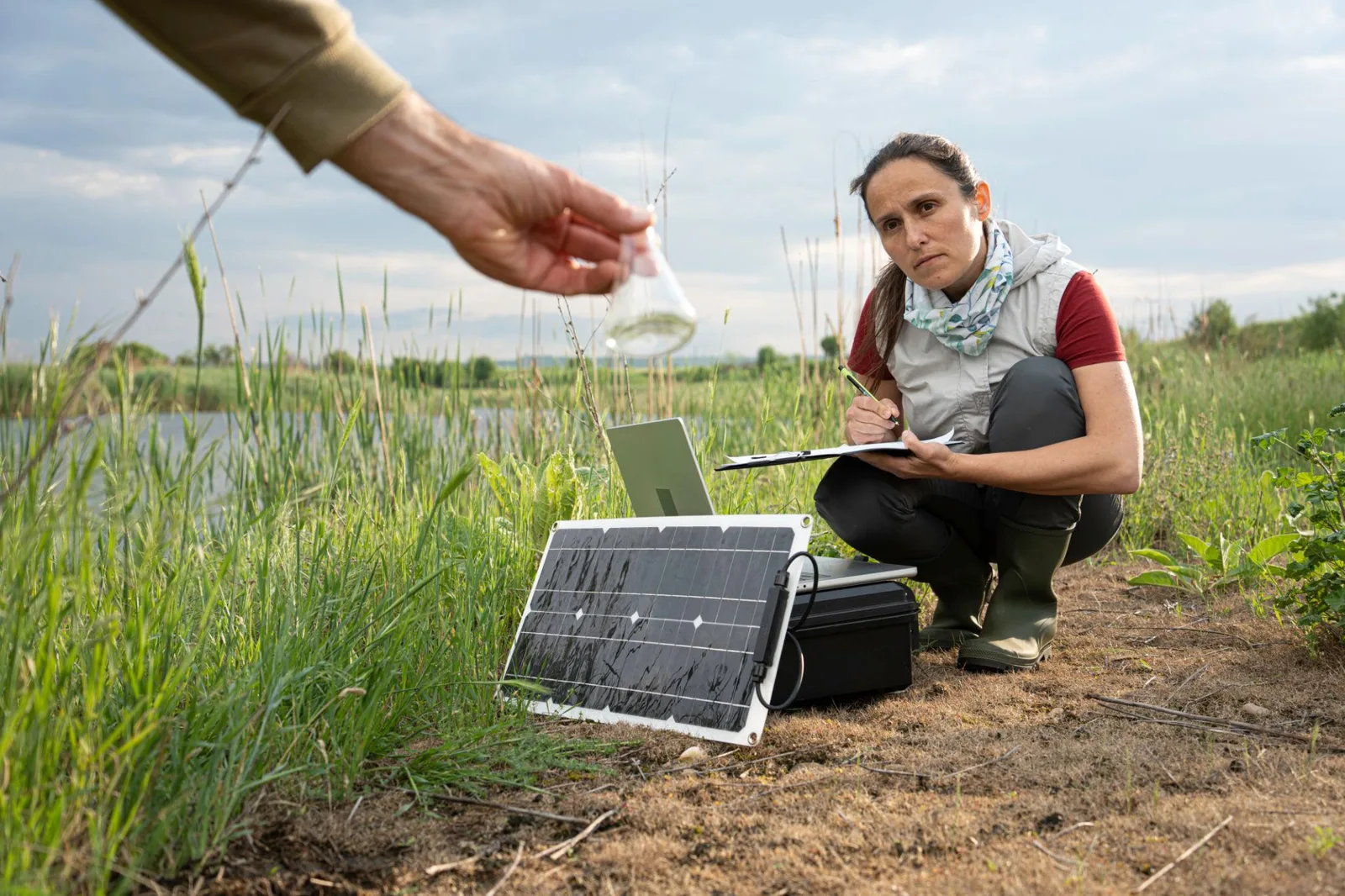
These disciplines do not sit behind the product as marketing credentials. They help define intended functions, test assumptions, observe change and keep every environmental claim within the available evidence.
Helps frame what can be assessed, which observations matter and where evidence does—or does not—support a performance statement.
Begins with living processes, planting communities, habitat relationships and the conditions of a particular waterbody.
Makes buoyancy, stability, connection, access, assembly and maintenance legible parts of the system.
Examines what each layer is made from, how it behaves in water, how long it should last and what happens next.
Shapes how modules become space: their composition, edges, rhythm, seasonality and relationship to people and place.
The system is formed in the exchange between these disciplines—not at their boundaries.
We move between research, making and the realities of a site. The sequence is directional, but never perfectly linear.
Frame the environmental, ecological, material and spatial questions—and the evidence needed to answer them.
Make ideas tangible enough to examine and challenge.
Look for behaviour, limits and evidence—not confirmation alone.
Bring what we learn into a coherent system and composition.
Respond to water, climate, access, use and local conditions.
Continue watching, maintaining and changing what needs to change.
Different collaborators enter at different moments. The aim is not to gather disciplines around a finished object, but to keep questions, decisions and evidence connected from the first brief through long-term care.
Bring us a site challenge, a research direction or a material question. We can begin by understanding what the water needs.