Shared logic
A repeatable kit establishes a consistent way to assemble, maintain and adapt the living system.

A modular system does not have to look modular. Different arrangements, planting communities and edges allow the same underlying system to respond to different waterscapes.
Standardisation belongs beneath the landscape. Above it, modules become a framework for varied spatial, botanical and ecological expression.
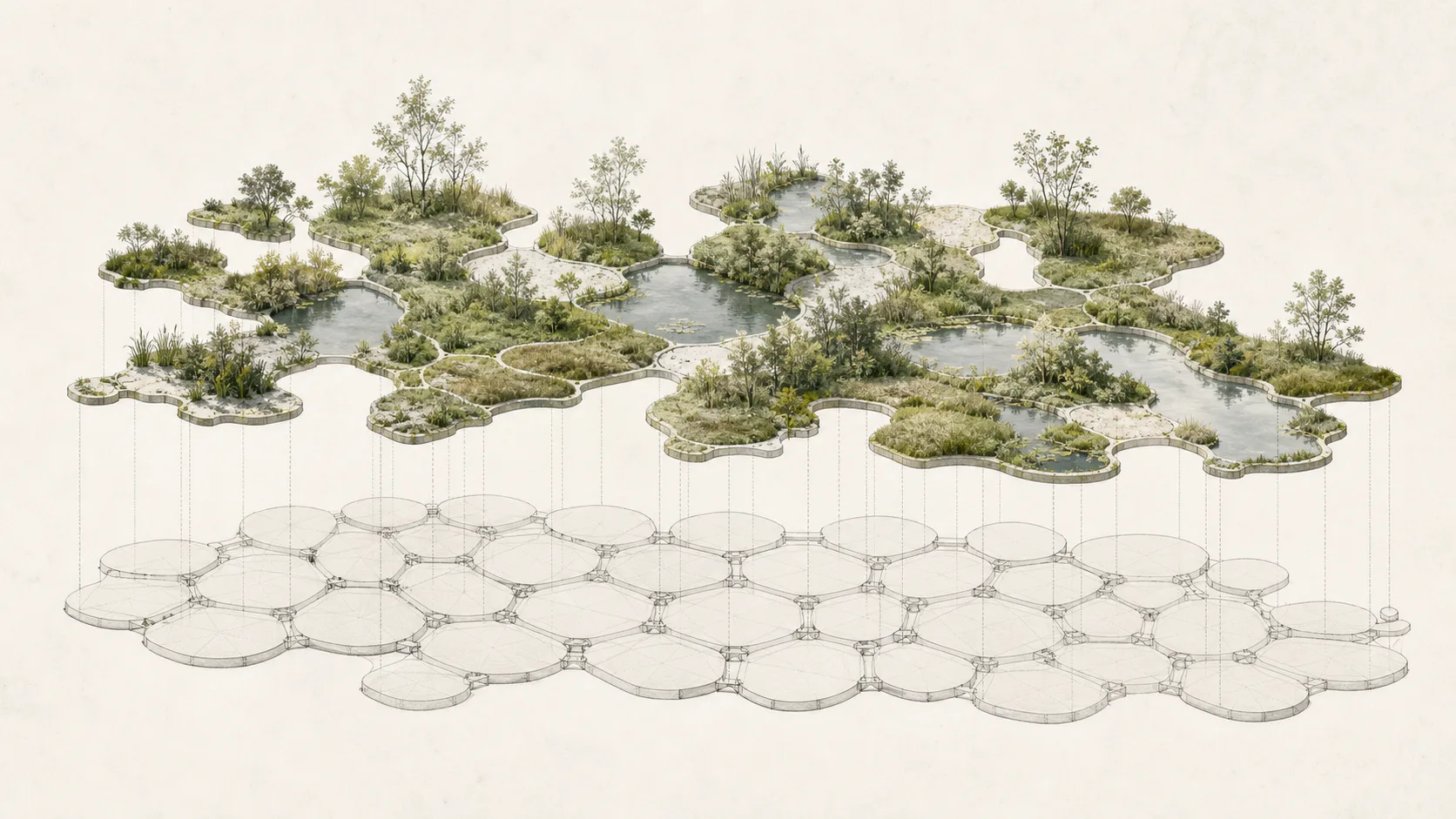
A repeatable kit establishes a consistent way to assemble, maintain and adapt the living system.
Geometry, access, water character and ecological intent guide each composition.
Planting, spacing and edge conditions allow every project to develop its own presence.
These are spatial starting points rather than fixed products. Each can be adjusted, combined or extended in response to a site.
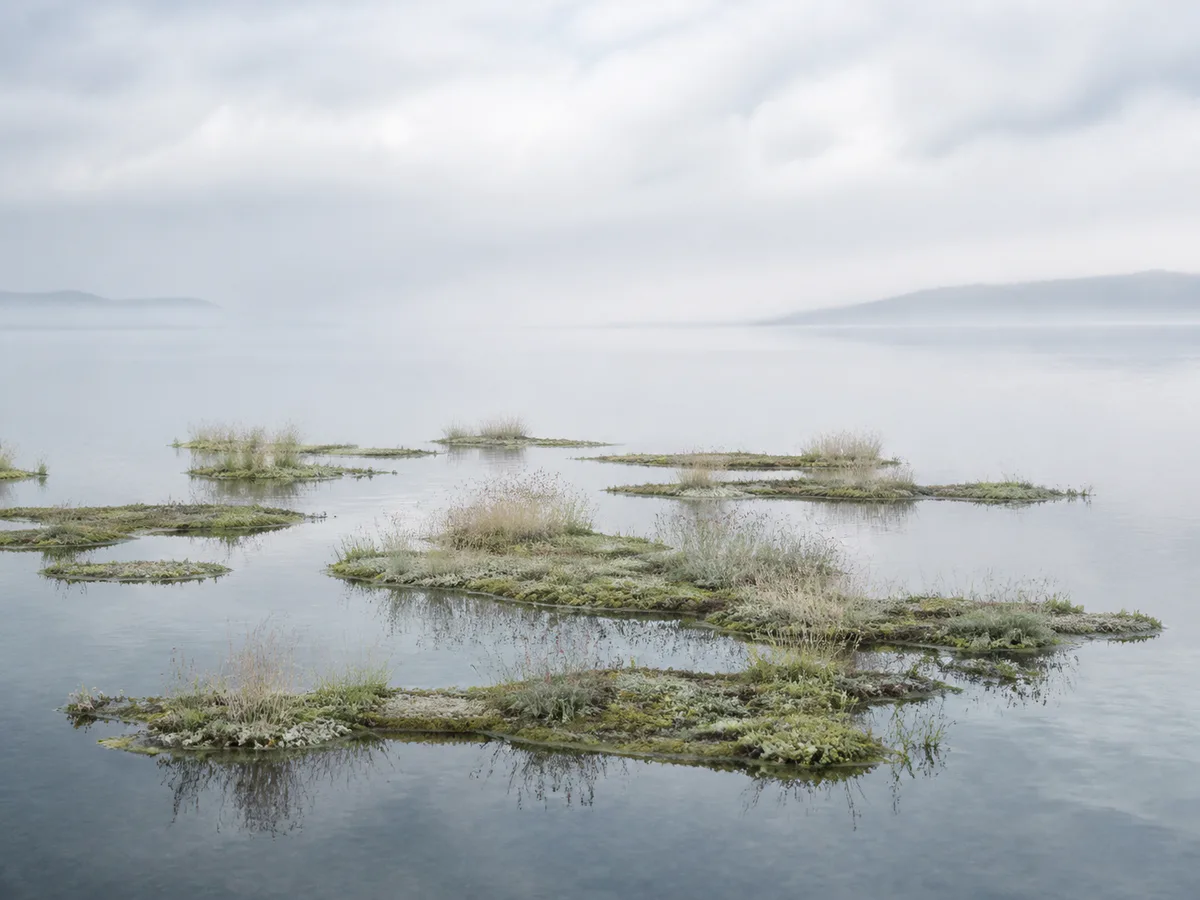
Low, dispersed clusters that read as a shifting field across open water.
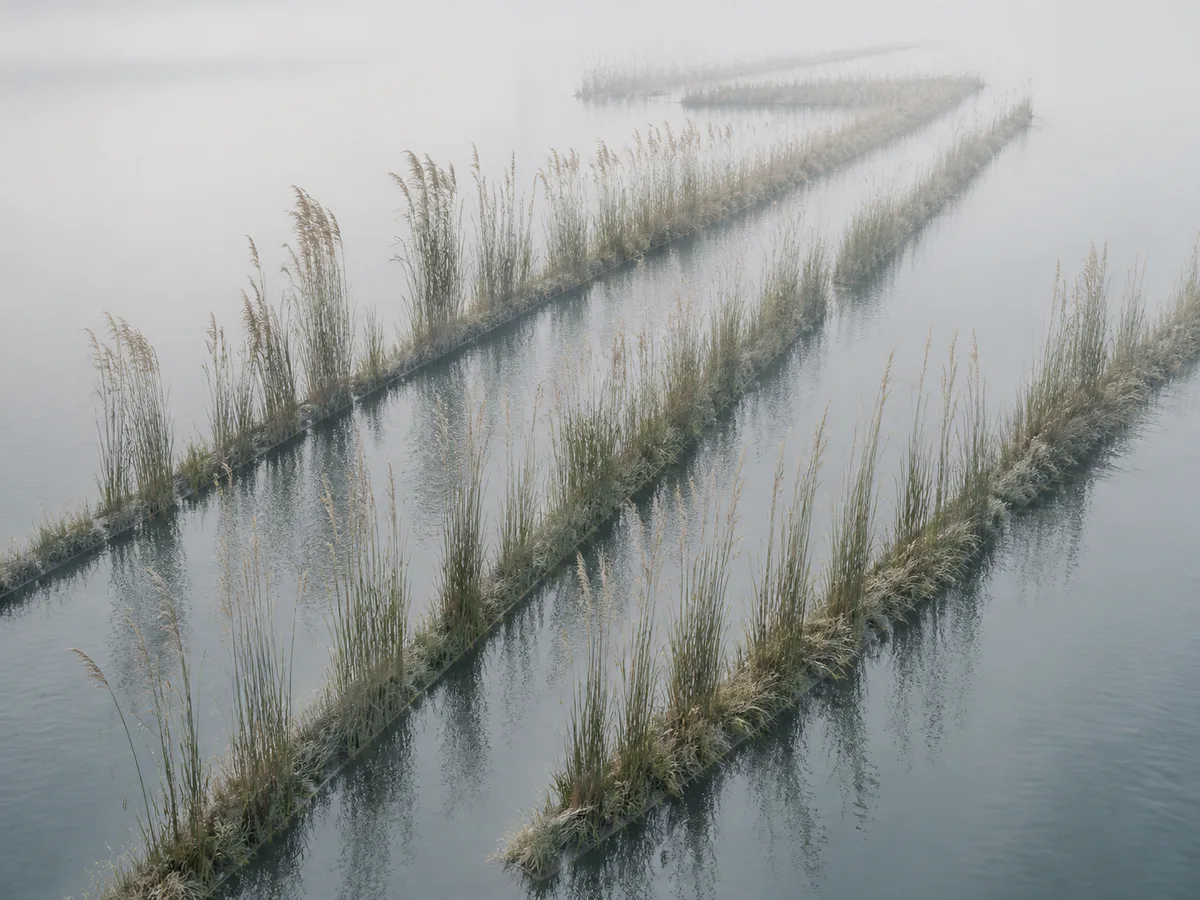
Linear bands and upright planting that reinforce direction, threshold and movement.
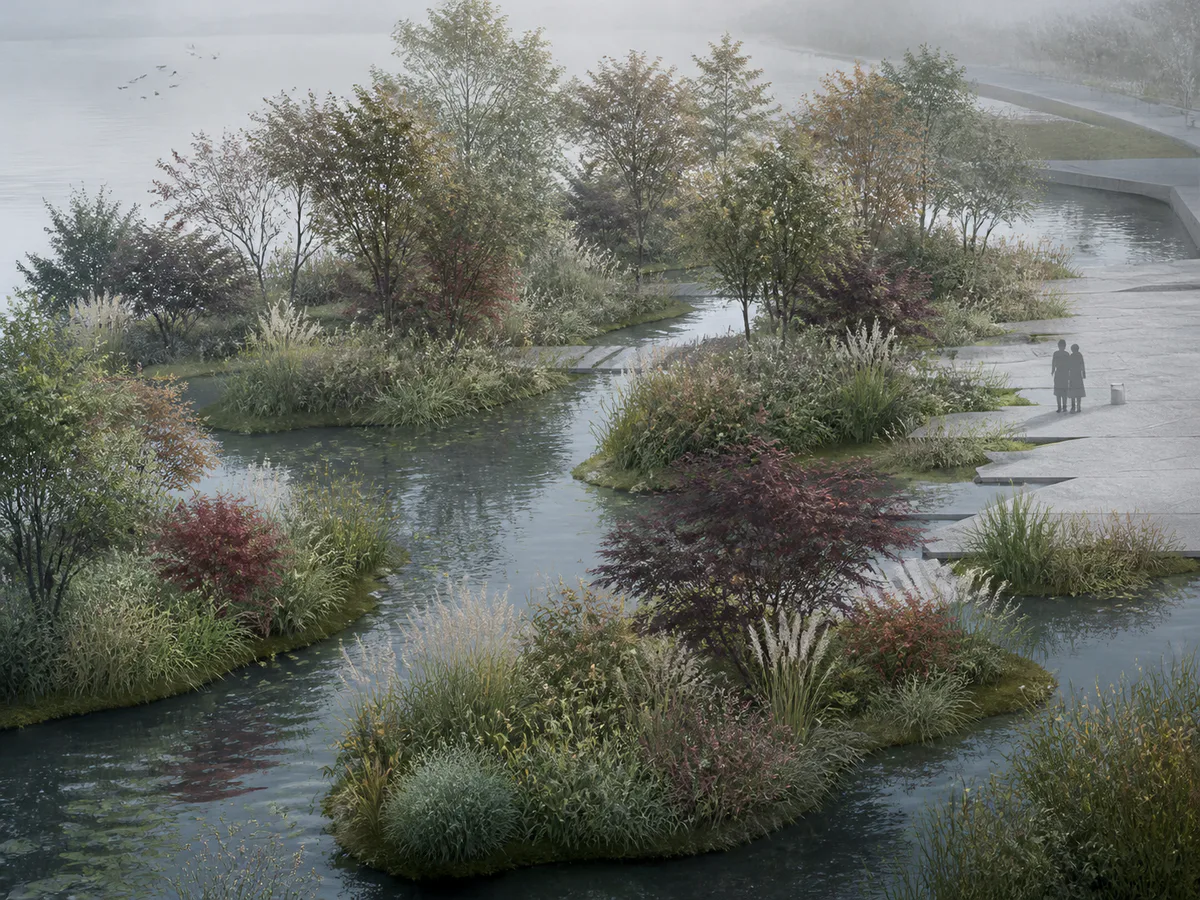
Layered communities composed for season, colour and close-range experience.
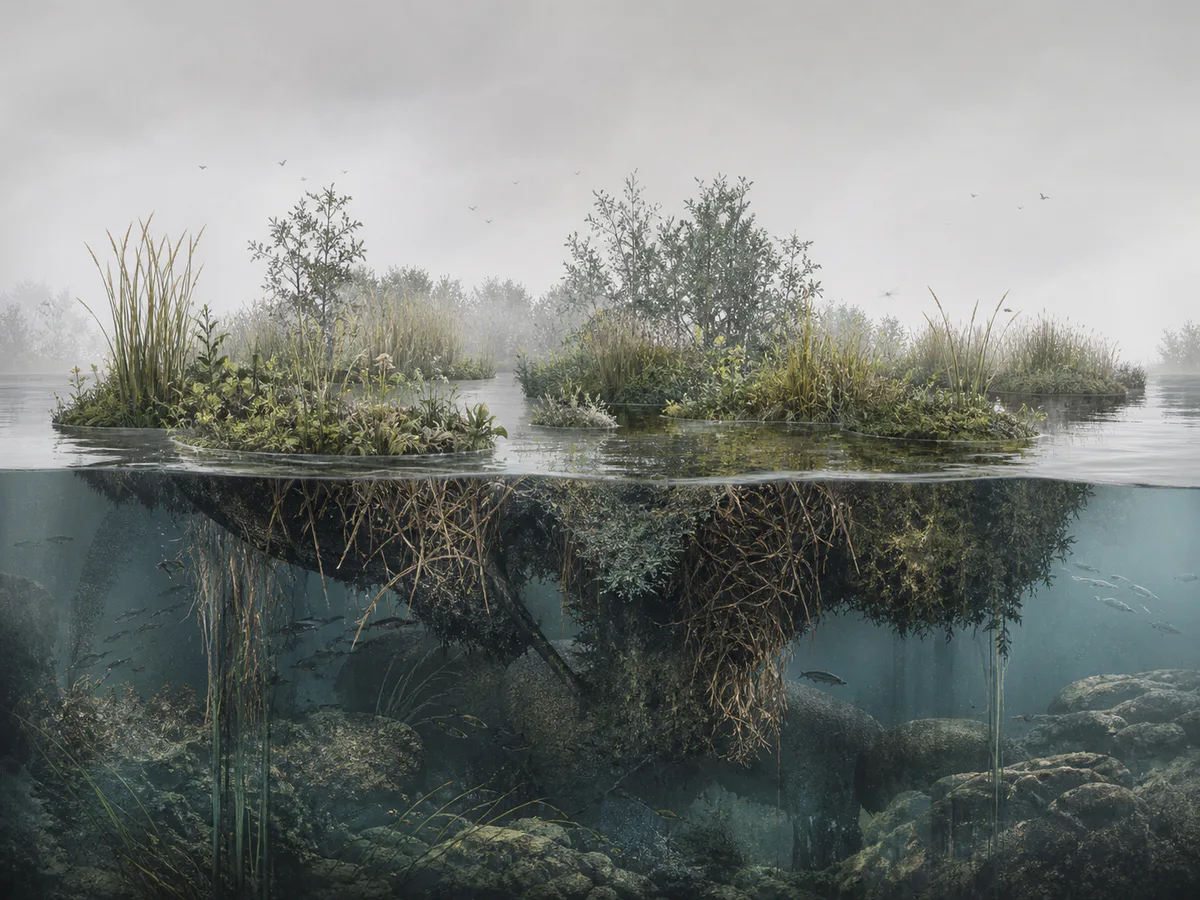
Irregular, sheltered arrangements that prioritise complexity and ecological refuge.
Planting is not decoration applied to a finished object. It is a living design material that changes the silhouette, atmosphere and ecological performance of the composition.
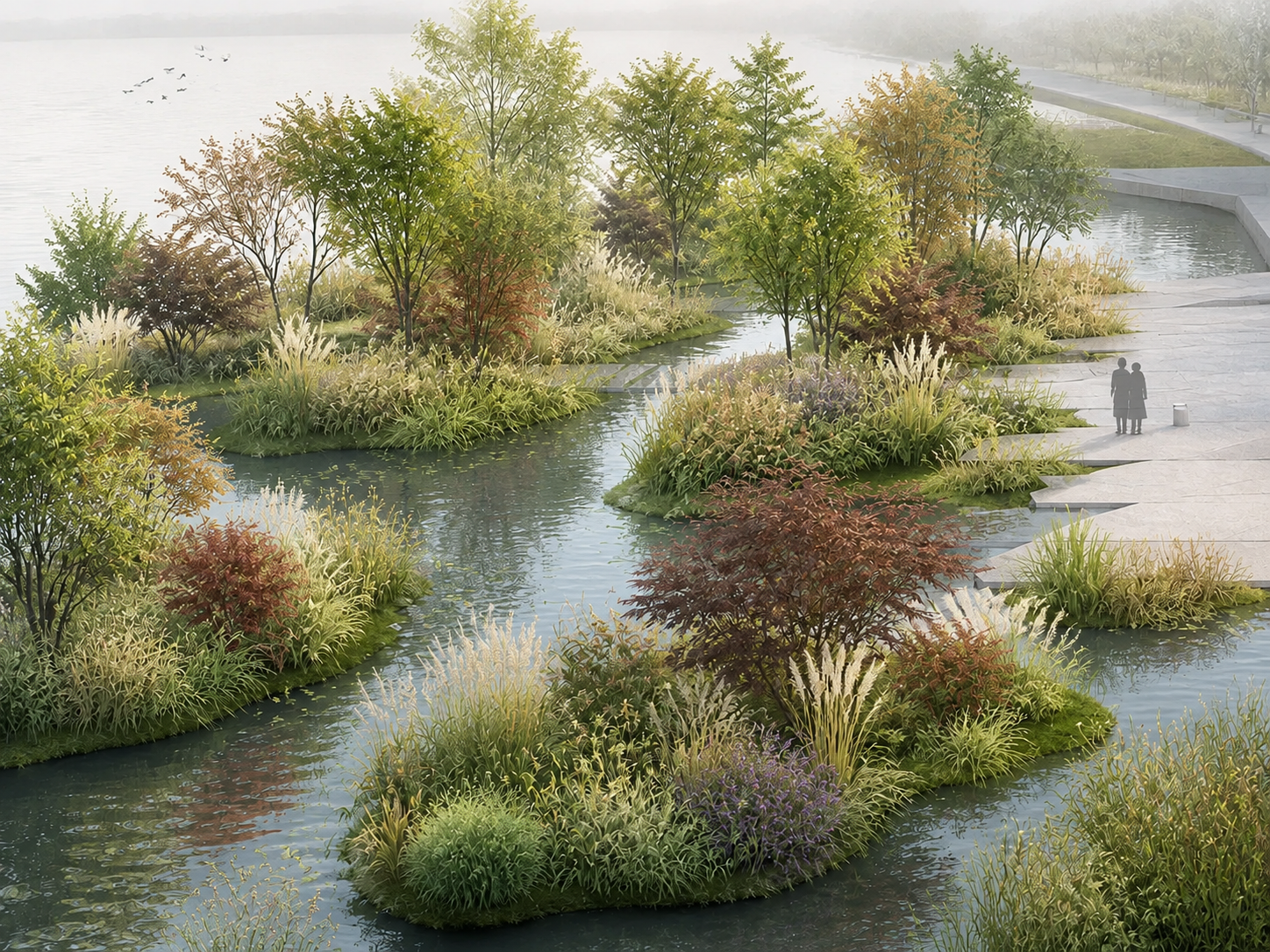
The character of a water landscape is shaped as much by intervals and gaps as by modules themselves.
Treat the composition as a sequence of thresholds, not an object dropped onto water. A continuous band can hold an urban edge; dispersed islands can extend depth, borrow the distant view and allow water to remain present between them.
Density gives weight; openness gives breath. Concentrate planting where enclosure, shade or habitat complexity matters, then use open water as deliberate spatial pause—not as leftover space between modules.
An edge can disappear through low planting, reflections and irregular overlap, or become precise where public space needs orientation. The choice should follow viewing distance, movement and the character of the adjoining architecture.
Repeat a construction logic, not a visible pattern. Shift interval, height, planting mass and seasonal emphasis so the whole remains coherent while avoiding the mechanical uniformity of a manufactured raft.
We want to work with landscape architects, architects and planners from early site thinking through composition, planting intent and project integration.
Begin with the information your project needs. We can collaborate around site conditions, composition, planting intent and technical interfaces.
Share the site, its constraints and the landscape you want to create. We can explore what kind of system belongs there.
Start a Project→